Bitcoin has become one of the world’s most popular digital assets, attracting millions of investors, traders, and technology enthusiasts. As cryptocurrency adoption continues to grow, more beginners are looking for safe and reliable ways to purchase Bitcoin.
However, buying Bitcoin for the first time can feel overwhelming. New investors often encounter unfamiliar terms such as cryptocurrency exchanges, wallets, private keys, and two-factor authentication. Additionally, the crypto market has attracted scammers and fraudulent platforms, making security an essential consideration.
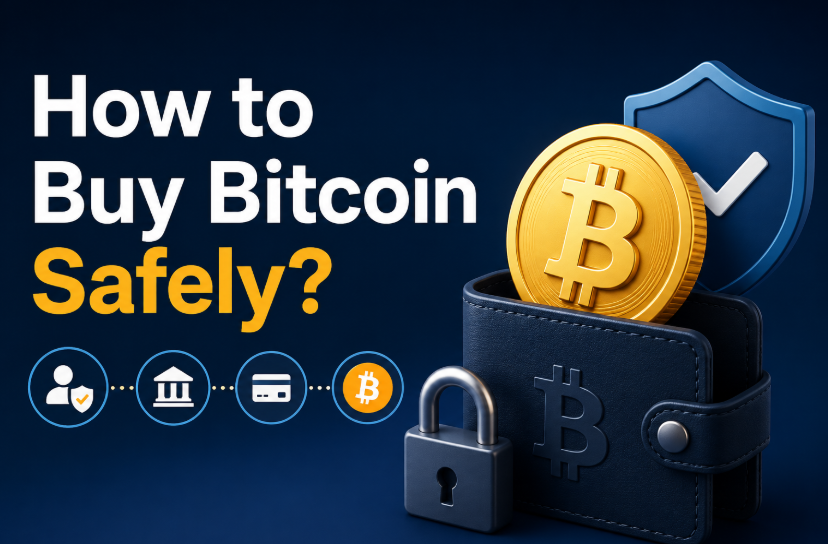
The good news is that buying Bitcoin safely is relatively straightforward when you follow best practices and understand the risks involved. This guide explains everything beginners need to know about purchasing Bitcoin securely, from selecting an exchange to storing your investment safely.
What Is Bitcoin?
Bitcoin is a decentralized digital currency that operates on blockchain technology. Unlike traditional currencies issued by governments, Bitcoin is controlled by a distributed network of computers around the world.
Bitcoin offers several unique characteristics:
- Decentralization
- Limited supply
- Global accessibility
- Transparency
- Security
- Borderless transactions
Because of these features, many people view Bitcoin as both a digital payment system and a long-term investment asset.
Why Is Safety Important When Buying Bitcoin?
The cryptocurrency market operates differently from traditional financial systems. Unlike banks, cryptocurrency transactions are generally irreversible.
If you make a mistake or fall victim to fraud, recovering your funds can be extremely difficult.
Common risks include:
- Fake cryptocurrency exchanges
- Phishing attacks
- Investment scams
- Hacked accounts
- Malware
- Fake wallet applications
- Social engineering attacks
Following proper security practices can significantly reduce these risks.
Step 1: Understand How Bitcoin Works
Before purchasing Bitcoin, beginners should understand the basic concepts.
Important topics include:
- Blockchain technology
- Cryptocurrency wallets
- Public and private keys
- Transaction fees
- Market volatility
- Bitcoin security
Educating yourself first can help prevent costly mistakes.
Step 2: Choose a Reputable Cryptocurrency Exchange
A cryptocurrency exchange is a platform where users can buy and sell digital assets.
Choosing a trusted exchange is one of the most important steps in purchasing Bitcoin safely.
When evaluating exchanges, consider:
- Security features
- Regulatory compliance
- Reputation
- User reviews
- Customer support
- Transaction fees
- Available payment methods
Avoid using unknown platforms that promise unrealistic returns or bonuses.
Features to Look for in a Safe Bitcoin Exchange
| Feature | Why It Matters |
|---|---|
| Two-factor authentication | Adds an extra layer of account security |
| Regulatory compliance | Indicates legal operation |
| Cold storage | Protects customer funds offline |
| Insurance policies | May protect against certain losses |
| Strong reputation | Reduces fraud risk |
| Customer support | Helps resolve issues quickly |
| Transparent fees | Prevents unexpected costs |
| Security audits | Demonstrates platform reliability |
Choosing an exchange with these features improves overall security.
Step 3: Create and Secure Your Account
After selecting an exchange, create an account using a strong password.
Best practices include:
- Use a unique password
- Enable two-factor authentication
- Avoid reusing passwords
- Store recovery codes securely
- Verify official website addresses
Many exchanges also require identity verification to comply with regulations.
Step 4: Verify Your Identity
Most reputable cryptocurrency exchanges require Know Your Customer (KYC) verification.
This process typically involves:
- Providing identification documents
- Uploading a selfie
- Confirming your address
- Verifying your phone number
Although some users dislike verification procedures, they help reduce fraud and improve platform security.
Step 5: Add Funds to Your Account
After verification, you can deposit money into your account.
Common payment methods include:
Bank Transfers
Benefits:
- Lower fees
- Higher limits
- Increased security
Disadvantages:
- Slower processing times
Debit Cards
Benefits:
- Fast transactions
- Easy to use
Disadvantages:
- Higher fees
Credit Cards
Benefits:
- Convenience
Disadvantages:
- Higher costs
- Potential debt risks
Digital Payment Services
Some exchanges support electronic payment systems depending on your region.
Step 6: Purchase Bitcoin
Once funds are available, you can buy Bitcoin.
Most exchanges offer several order types:
Market Orders
Market orders purchase Bitcoin immediately at the current market price.
Advantages:
- Simple
- Fast
- Beginner friendly
Limit Orders
Limit orders allow you to specify the maximum price you are willing to pay.
Advantages:
- Better price control
- Strategic purchasing
For beginners, market orders are often the easiest option.
Should You Buy a Whole Bitcoin?
No.
Bitcoin is divisible into very small units called satoshis.
This means you can purchase:
- $10 worth of Bitcoin
- $100 worth of Bitcoin
- $500 worth of Bitcoin
- Any amount within your budget
Many successful investors begin with small purchases while learning the market.
Step 7: Transfer Bitcoin to a Secure Wallet
One of the most important safety practices is moving Bitcoin from exchanges to a personal wallet.
This follows the common cryptocurrency principle:
“Not your keys, not your coins.”
Keeping Bitcoin on exchanges exposes users to:
- Exchange hacks
- Platform failures
- Account freezes
- Regulatory issues
Types of Bitcoin Wallets
| Wallet Type | Security Level | Ease of Use | Best For |
|---|---|---|---|
| Hardware wallet | Very high | Moderate | Long-term investors |
| Mobile wallet | Medium | High | Daily use |
| Desktop wallet | High | Moderate | Personal storage |
| Web wallet | Lower | Very high | Beginners and traders |
| Paper wallet | High | Difficult | Advanced users |
Hardware wallets are generally considered the safest option for long-term Bitcoin storage.
Protect Your Private Keys
Your private key is the most important piece of information associated with your Bitcoin.
If someone gains access to your private key, they gain access to your Bitcoin.
To protect your private keys:
- Never share them
- Store backups offline
- Avoid cloud storage
- Use hardware wallets
- Protect recovery phrases
Security begins with proper key management.
Common Bitcoin Buying Scams to Avoid
Unfortunately, cryptocurrency scams remain common.
Fake Exchanges
Fraudulent exchanges may steal deposits or personal information.
Guaranteed Profit Schemes
No legitimate investment guarantees profits.
Fake Customer Support
Scammers often impersonate support representatives.
Giveaway Scams
Fraudsters promise to double cryptocurrency deposits.
Phishing Websites
Fake websites attempt to steal login credentials.
Social Media Scams
Criminals frequently target cryptocurrency users on social platforms.
Always verify information before sending money.
Should You Buy Bitcoin All at Once?
Many investors use a strategy called Dollar Cost Averaging (DCA).
This involves purchasing Bitcoin regularly over time.
For example:
Weekly purchases
Biweekly purchases
Monthly purchases
Benefits include:
Reduced emotional investing
Lower volatility risk
Easier budgeting
Long-term discipline
Many beginners prefer this approach.
Tips for Buying Bitcoin Safely
Follow these best practices:
- Use reputable exchanges
- Enable two-factor authentication
- Research before investing
- Avoid emotional decisions
- Never share private keys
- Store Bitcoin securely
- Beware of scams
- Start with small amounts
- Verify website URLs
- Continue learning about cryptocurrency
These habits significantly improve investor security.
Is Buying Bitcoin Safe?
Buying Bitcoin can be safe when proper precautions are taken.
Bitcoin itself has proven highly secure due to its decentralized blockchain technology. Most risks arise from:
- User mistakes
- Fraud
- Poor security practices
- Untrustworthy platforms
Education and security awareness remain the best defenses.
Frequently Asked Questions
1. Is Bitcoin safe to buy?
Yes, Bitcoin can be purchased safely when using reputable exchanges and following proper security practices.
2. What is the safest way to buy Bitcoin?
The safest method is using a regulated cryptocurrency exchange and transferring funds to a personal wallet.
3. Can beginners buy Bitcoin?
Yes. Most exchanges provide beginner-friendly interfaces and educational resources.
4. How much money do I need to buy Bitcoin?
You can purchase small fractions of Bitcoin with relatively little money.
5. Should I keep Bitcoin on an exchange?
Long-term investors often prefer transferring Bitcoin to private wallets for greater security.
6. What is two-factor authentication?
Two-factor authentication adds an extra security step during login to protect your account.
7. Can Bitcoin be stolen?
Yes. Poor security practices, scams, and hacks can result in losses.
8. What is a Bitcoin wallet?
A Bitcoin wallet stores the private keys needed to access and manage Bitcoin.
9. Is Bitcoin legal?
Bitcoin legality varies by country, so investors should review local regulations.
10. Should beginners invest all their money in Bitcoin?
No. Investors should only invest amounts they can afford to risk and should consider diversification.
Conclusion
Buying Bitcoin safely requires more than simply opening an account and making a purchase. It involves understanding cryptocurrency fundamentals, selecting trustworthy platforms, protecting private keys, and avoiding common scams.
For beginners, the safest approach is to start slowly, invest only what you can afford, and prioritize security above everything else. As you gain experience and knowledge, you can develop a strategy that aligns with your financial goals and risk tolerance.
Bitcoin remains one of the most important innovations in digital finance, and learning how to buy it safely is the first step toward participating in the cryptocurrency ecosystem.