Bitcoin has become one of the most widely known digital assets, but buying it for the first time can feel confusing. New users often have questions about where to buy Bitcoin, how much to purchase, how wallets work, and how to keep their assets secure.
The process can be straightforward once you understand the basics.
Bitcoin can be purchased through cryptocurrency exchanges and other supported platforms. However, buying Bitcoin involves financial risk because its price can change significantly. Beginners should understand how the process works before committing money.
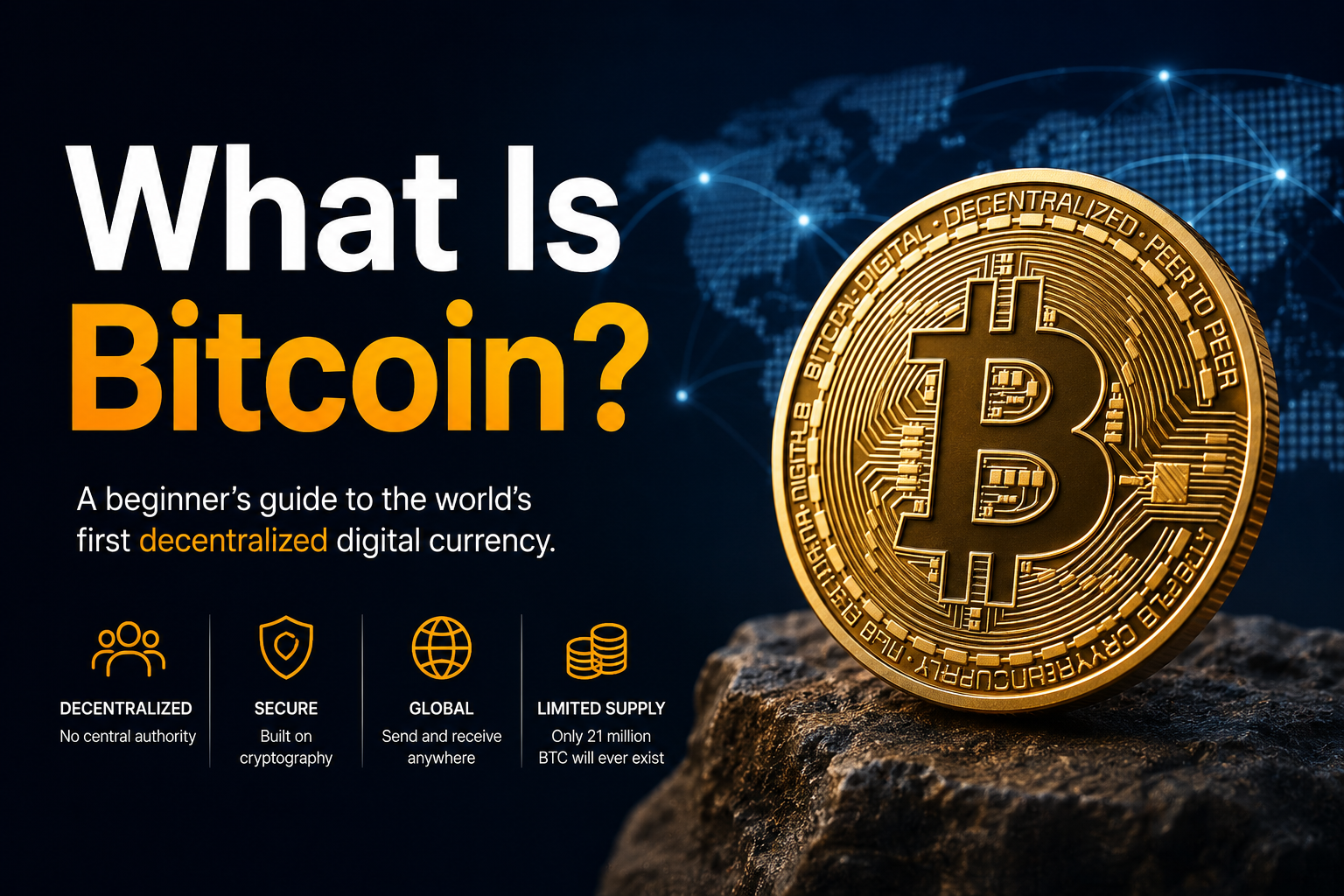
What Is Bitcoin?
Bitcoin is a decentralized digital asset that operates on a blockchain network.
Unlike traditional currencies that are issued and managed by central monetary authorities, Bitcoin operates through a distributed network of computers that follows predefined rules.
Bitcoin can be bought, sold, transferred, and stored using cryptocurrency wallets.
Its price is determined by market supply and demand and can fluctuate substantially.
What Do You Need to Buy Bitcoin?
Before purchasing Bitcoin, beginners generally need three things:
- A cryptocurrency platform that supports Bitcoin
- A payment method accepted by that platform
- A Bitcoin compatible wallet or account for storing the asset
Some platforms provide built in wallets, while others allow users to transfer Bitcoin to an external wallet.
The exact process depends on the platform and the user’s location.
Choose a Cryptocurrency Platform
The first practical step is choosing a platform that allows Bitcoin purchases.
When comparing platforms, consider factors such as:
- Security practices
- Transaction fees
- Deposit methods
- Withdrawal fees
- Available payment options
- Bitcoin withdrawal support
- Account security features
- Reputation
- Regulatory requirements in your location
Do not choose a platform solely because it offers the lowest fees.
Security and reliability are equally important.
Create an Account
After selecting a suitable platform, you will generally need to create an account.
The process may require information such as:
- Name
- Email address
- Phone number
- Identity documents
- Residential information
Many cryptocurrency platforms have identity verification requirements.
These requirements can vary depending on the platform and local regulations.
Only provide personal information through the platform’s official application or website.
Secure Your Account
Account security should be considered before making a purchase.
Use a strong and unique password.
Enable two factor authentication if available.
Avoid sharing authentication codes with anyone.
Be cautious of messages claiming to be customer support.
A common cryptocurrency scam involves someone pretending to represent an exchange or wallet provider and asking for passwords, verification codes, or recovery information.
Legitimate support should not require your private wallet credentials.
Add a Payment Method
Depending on the platform and location, users may be able to fund their account using methods such as:
- Bank transfer
- Debit card
- Credit card
- Other supported payment services
The available options can vary.
Before depositing money, check the platform’s fees and processing times.
Some payment methods may have higher fees than others.
Decide How Much Bitcoin to Buy
You do not need to purchase one entire Bitcoin.
Bitcoin can be divided into smaller units.
This means someone can purchase a small amount based on their available budget.
For beginners, it can be sensible to start with an amount they are comfortable losing rather than committing a large portion of their savings.
Bitcoin can experience significant price fluctuations, so the amount invested should reflect your personal risk tolerance.
Understand Bitcoin Prices
Bitcoin’s price changes continuously while markets are active.
The price you see when deciding to buy may not be exactly the price at which your transaction is completed.
This difference can occur because of market movement, trading conditions, and transaction processing.
Always check the final purchase price and associated fees before confirming a transaction.
Understand Bitcoin Fees
Buying Bitcoin can involve several types of fees.
Depending on the platform, you may encounter:
- Trading fees
- Deposit fees
- Withdrawal fees
- Network fees
- Payment processing fees
Not every platform charges all of these fees.
Always review the fee information before completing a transaction.
A platform with a low trading fee may still have other charges that affect the total cost.
Place a Bitcoin Order
Once your account is funded, you can usually select Bitcoin and enter the amount you want to purchase.
Some platforms offer different order types.
A market order generally attempts to execute the purchase at the available market price.
A limit order allows you to specify a price at which you are willing to buy.
Beginners should understand the difference before choosing an order type.
The exact options depend on the platform.
Review the Transaction
Before confirming your purchase, check:
- Amount of Bitcoin
- Purchase price
- Trading fee
- Total amount charged
- Order type
- Payment method
Taking a few seconds to review the details can help prevent mistakes.
Once confirmed, the Bitcoin should appear in the account according to the platform’s processing system.
Where Is Bitcoin Stored?
Bitcoin does not exist as a physical coin.
Ownership is recorded on the Bitcoin blockchain.
A wallet contains the cryptographic information needed to control Bitcoin associated with a particular address.
There are several types of wallets.
Exchange Wallet
The Bitcoin remains associated with an account managed by a cryptocurrency platform.
This can be convenient for beginners but means the platform is involved in controlling access to the funds.
Software Wallet
A software wallet is an application that allows users to manage their cryptocurrency.
It can provide greater direct control but also places more responsibility on the user.
Hardware Wallet
A hardware wallet is a physical device designed to protect cryptocurrency credentials.
It can provide an additional layer of security when properly configured and used.
What Is a Bitcoin Wallet Address?
A Bitcoin wallet address is a string of characters used to receive Bitcoin.
You can share a receiving address when someone needs to send Bitcoin to you.
However, users should carefully verify addresses before sending funds.
Blockchain transactions can be difficult or impossible to reverse if Bitcoin is sent to the wrong address.
What Is a Private Key?
A private key is a cryptographic credential that provides control over Bitcoin associated with a wallet.
It should be treated as highly confidential.
Never share a private key with another person.
Anyone who gains control of a private key may be able to access the associated assets.
What Is a Recovery Phrase?
Some cryptocurrency wallets provide a recovery phrase, sometimes called a seed phrase.
It is typically a sequence of words used to recover access to a wallet.
This information should be kept private and stored securely.
Never enter a recovery phrase into an unfamiliar website, form, message, or application.
Never send it to someone claiming they need it to verify your wallet.
Should Beginners Keep Bitcoin on an Exchange?
There is no universal answer.
Keeping Bitcoin on an established platform can be convenient, especially for someone who is learning how cryptocurrency works.
Using a personal wallet can provide greater direct control but also creates additional responsibility.
If you manage your own wallet, losing the recovery information or exposing your private credentials can result in permanent loss of access.
Beginners should understand both approaches before deciding how to store their Bitcoin.
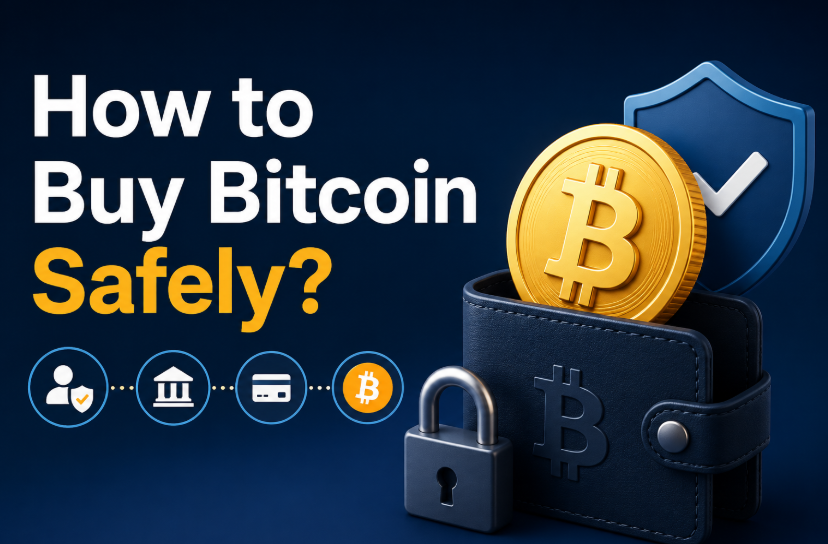
How to Buy Bitcoin Safely
Security should be part of the buying process from the beginning.
Use only trusted platforms.
Check the spelling of websites and applications carefully.
Avoid clicking cryptocurrency links sent through unexpected messages.
Enable two factor authentication.
Use a unique password.
Keep wallet recovery information offline and secure.
Double check Bitcoin addresses before sending funds.
Do not share private keys or recovery phrases.
These basic practices can reduce common security risks.
Watch Out for Bitcoin Scams
Cryptocurrency scams can take many forms.
Common examples include:
- Fake investment websites
- Fake customer support
- Phishing messages
- Giveaway scams
- Impersonation scams
- Fake wallet applications
- Guaranteed profit schemes
- Romance investment scams
Be particularly cautious when someone promises guaranteed Bitcoin returns.
Bitcoin is a volatile asset, and legitimate investments cannot guarantee specific profits.
Can You Buy Bitcoin With a Small Amount?
Yes.
Because Bitcoin can be divided into smaller units, users do not need to purchase one whole Bitcoin.
A platform may allow you to buy Bitcoin based on a specific currency amount.
This makes it possible to start with a relatively small purchase while learning how the market works.
Should Beginners Buy Bitcoin All at Once?
There is no universal strategy that works for everyone.
Some people prefer to make one purchase, while others spread purchases over time.
A strategy known as dollar cost averaging involves investing a fixed amount at regular intervals regardless of short term price movements.
This can reduce the temptation to make decisions based entirely on short term market changes, but it does not eliminate investment risk.
Is Bitcoin a Good Investment for Beginners?
Bitcoin may be suitable for some investors, but it is not risk free.
Its price can rise or fall substantially.
Before buying, consider:
- Your financial goals
- Your investment timeframe
- Your ability to tolerate losses
- Your existing savings
- Your overall financial situation
Avoid using money needed for essential expenses.
What Happens After Buying Bitcoin?
After purchasing Bitcoin, you can generally hold it, sell it, or transfer it to another compatible wallet.
You do not need to constantly trade Bitcoin.
Some investors choose to hold it for longer periods, while others actively trade.
The appropriate approach depends on the individual’s goals and risk tolerance.
Should You Transfer Bitcoin to a Personal Wallet?
A personal wallet can give users greater direct control over their Bitcoin.
However, this also means taking responsibility for wallet security.
Before transferring Bitcoin, beginners should understand:
- How wallet addresses work
- How network fees work
- How recovery information is secured
- How to verify a transaction
- How to protect private credentials
For a first transfer, some users choose to send a small test amount before transferring a larger balance.
Keep Records of Your Transactions
Keeping records of cryptocurrency purchases can be useful.
Save information such as:
- Purchase date
- Purchase amount
- Price
- Fees
- Sale information
- Transfers
Tax rules regarding cryptocurrency vary by country and can change over time.
Consult an appropriate tax professional if you need advice about your specific situation.
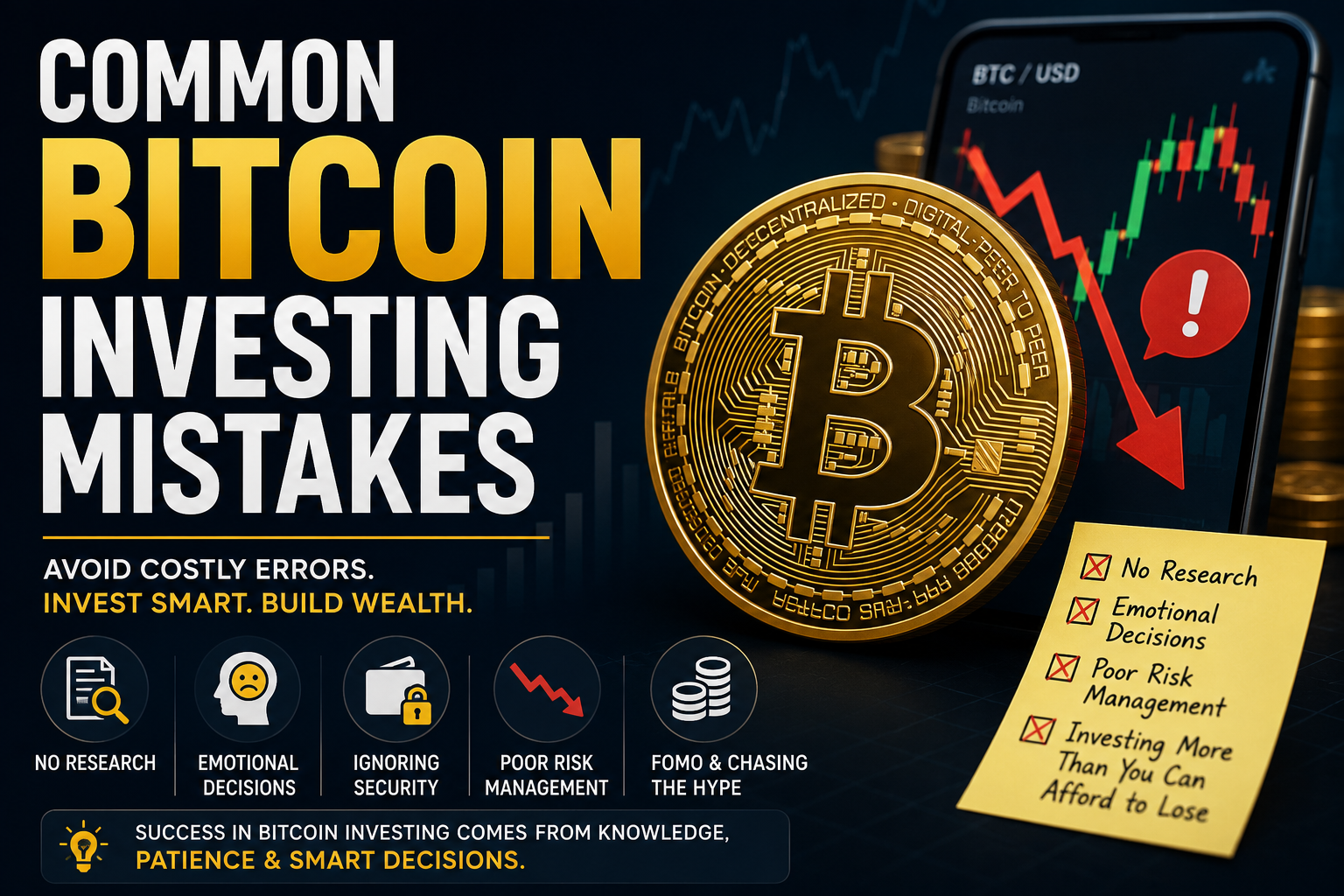
Common Mistakes Beginners Should Avoid
Buying Because of Social Media Hype
A sudden increase in online attention does not guarantee future price growth.
Investing More Than You Can Afford to Lose
Bitcoin can be highly volatile.
Sharing Recovery Information
Never share private keys or recovery phrases.
Ignoring Fees
Small fees can become significant when making frequent transactions.
Sending Bitcoin to the Wrong Address
Always verify the receiving address before confirming a transfer.
Using Untrusted Platforms
Security should be a major consideration when choosing where to purchase Bitcoin.
Expecting Guaranteed Profits
No legitimate Bitcoin strategy can guarantee a specific return.
A Simple Bitcoin Buying Process
For beginners, the process can be summarized in a few steps.
Step 1: Learn how Bitcoin works.
Step 2: Choose a reputable cryptocurrency platform.
Step 3: Create and verify your account.
Step 4: Secure the account with a strong password and two factor authentication.
Step 5: Add an accepted payment method.
Step 6: Decide how much you are comfortable investing.
Step 7: Review the Bitcoin price and fees.
Step 8: Place your order.
Step 9: Confirm that the Bitcoin has arrived in your account.
Step 10: Decide how you want to store it securely.
Final Thoughts
Buying Bitcoin for the first time does not have to be complicated.
The basic process involves choosing a suitable platform, creating and securing an account, adding a payment method, purchasing an amount that fits your budget, and understanding how to store the Bitcoin safely.
The more important part is understanding the risks.
Bitcoin can experience significant price movements, and cryptocurrency transactions can be difficult to reverse. Security mistakes can also result in permanent loss of funds.
Beginners should start slowly, learn how wallets and transactions work, protect their account credentials, and avoid making decisions based solely on market hype.
Understanding the technology and the risks can make the Bitcoin buying process much easier to navigate.
Frequently Asked Questions
How do beginners buy Bitcoin?
Beginners can generally buy Bitcoin through a cryptocurrency platform that supports BTC. The process usually involves creating an account, completing required verification, adding a payment method, and placing a Bitcoin purchase.
Do I need to buy one whole Bitcoin?
No. Bitcoin can be divided into smaller units, so you can purchase a fraction of one Bitcoin.
What is the smallest amount of Bitcoin I can buy?
The minimum depends on the platform you use. Many platforms allow users to purchase relatively small amounts of Bitcoin.
Is buying Bitcoin safe?
Buying Bitcoin involves financial and security risks. Using a reputable platform, protecting account credentials, and understanding wallet security can help reduce some risks.
Can Bitcoin lose value?
Yes. Bitcoin is highly volatile, and its market price can decline significantly.
How should beginners store Bitcoin?
Beginners can keep Bitcoin within a platform’s wallet or use a personal cryptocurrency wallet. Each option has different security and control considerations.
What is a Bitcoin wallet?
A Bitcoin wallet is a tool that manages the cryptographic credentials needed to control Bitcoin associated with blockchain addresses.
What is a Bitcoin address?
A Bitcoin address is a destination used to receive Bitcoin.
What is a private key?
A private key is a cryptographic credential that provides control over Bitcoin associated with a wallet. It should never be shared.
What is a recovery phrase?
A recovery phrase is a sequence of words that can allow a user to restore access to a compatible cryptocurrency wallet. It should be kept private and secure.
Can I buy Bitcoin with a bank account?
Some cryptocurrency platforms support bank transfers or other banking methods. Available options depend on the platform and location.
Can I buy Bitcoin with a card?
Some platforms support debit or credit card purchases. Fees and availability vary.
Do I have to pay fees when buying Bitcoin?
Most platforms charge some form of fee or spread. Review the complete transaction cost before confirming a purchase.
What is dollar cost averaging?
Dollar cost averaging involves investing a fixed amount at regular intervals instead of making one large purchase. It can reduce the focus on short term price timing but does not eliminate investment risk.
Should I buy Bitcoin when the price is low?
Trying to identify the exact bottom is difficult. Instead of relying on a single price prediction, consider your financial goals, risk tolerance, and investment strategy.
Can I sell Bitcoin after buying it?
Yes. Bitcoin can generally be sold through platforms that support Bitcoin trading.
Can Bitcoin transactions be reversed?
Bitcoin transactions generally cannot simply be reversed after confirmation. Always verify the receiving address before sending funds.
What are the biggest Bitcoin scams?
Common scams include fake investment platforms, phishing attacks, impersonation, fake customer support, fraudulent giveaways, and promises of guaranteed profits.
Should I invest all my savings in Bitcoin?
Putting all of your savings into a highly volatile asset can create substantial financial risk. Investment decisions should consider your overall financial situation and ability to tolerate losses.
Is Bitcoin suitable for beginners?
Beginners can learn about and purchase Bitcoin, but they should understand cryptocurrency volatility, security responsibilities, fees, and transaction risks before investing.
What should I learn before buying Bitcoin?
Learn the basics of Bitcoin, wallets, private keys, recovery phrases, transaction fees, exchange security, market volatility, and common cryptocurrency scams before making a purchase.