Bitcoin has become one of the most talked-about investment assets in the world. Since its launch in 2009, it has transformed from an experimental digital currency into a globally recognized store of value and a key part of many investment portfolios. While Bitcoin has created significant wealth for long-term investors, it has also led to substantial losses for those who invest without a clear strategy.
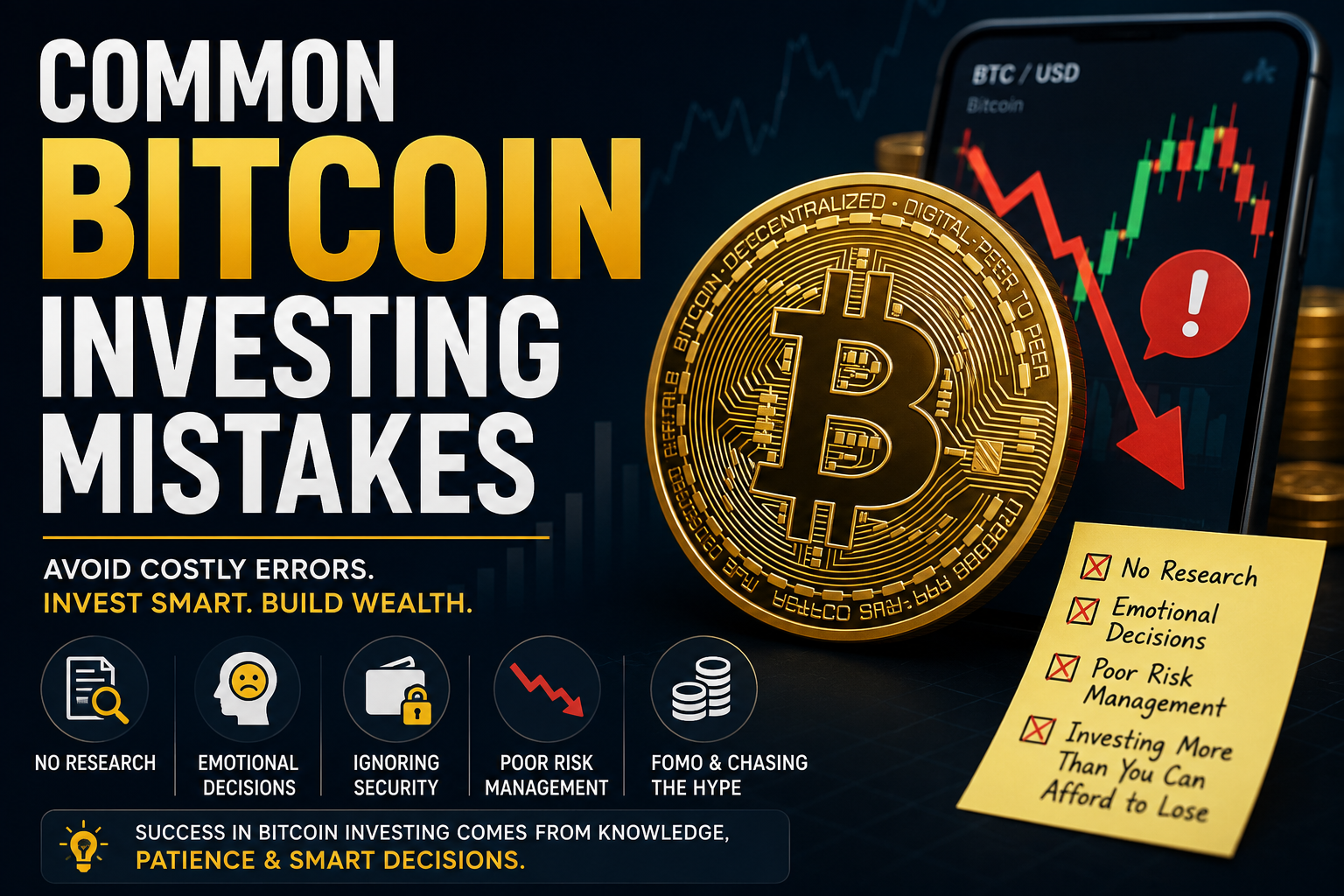
Many new investors make emotional decisions, chase market trends, or overlook basic security practices. These mistakes can reduce profits, increase risks, and sometimes result in the complete loss of funds.
The good news is that most Bitcoin investing mistakes are avoidable. By understanding common pitfalls and following disciplined investment practices, you can make smarter decisions and protect your capital.
In this guide, we’ll explore the most common Bitcoin investing mistakes and explain how to avoid them.
Why Bitcoin Investing Requires a Different Mindset
Unlike traditional investments, Bitcoin is highly volatile. Prices can rise or fall dramatically within hours, making emotional reactions more likely. At the same time, Bitcoin operates on decentralized blockchain technology, meaning investors are responsible for securing their own assets.
Success with Bitcoin isn’t just about buying at the right time. It also involves patience, risk management, research, and strong security habits.
1. Investing Without Understanding Bitcoin
One of the biggest mistakes beginners make is buying Bitcoin simply because everyone else is talking about it.
Many investors purchase Bitcoin after hearing success stories from friends, influencers, or social media without understanding:
- How Bitcoin works
- Why it has value
- Its limited supply
- Blockchain technology
- Market volatility
Before investing, spend time learning the fundamentals. A basic understanding helps you make rational decisions during both market highs and lows.
2. Investing More Than You Can Afford to Lose
Bitcoin has delivered impressive long-term returns, but it remains a high-risk asset.
Some investors put their entire savings into Bitcoin, expecting guaranteed profits. If prices fall significantly, financial stress often leads to panic selling.
A better approach is to invest only money that won’t affect your daily expenses or emergency savings if the market declines.
Diversification remains an important part of responsible investing.
3. Buying During Market Hype
Fear of Missing Out (FOMO) is responsible for many poor investment decisions.
When Bitcoin reaches new all-time highs, social media becomes filled with optimistic predictions. Many first-time investors rush to buy without considering whether prices have already risen significantly.
Buying solely because everyone else is buying often leads to purchasing near market peaks.
Instead of chasing hype, develop a long-term investment strategy.
4. Panic Selling During Price Drops
Bitcoin has experienced multiple market corrections throughout its history.
Sharp declines often cause inexperienced investors to panic and sell at a loss.
Market volatility is a normal part of Bitcoin investing. Successful long-term investors understand that temporary price fluctuations do not always reflect Bitcoin’s long-term potential.
Avoid making investment decisions based solely on short-term market movements.
5. Trying to Time the Market
Many investors believe they can perfectly predict Bitcoin’s highs and lows.
In reality, consistently timing the market is extremely difficult, even for experienced traders.
Waiting endlessly for the “perfect” buying opportunity can result in missed gains, while attempting to sell at the exact top often fails.
Many long-term investors prefer Dollar-Cost Averaging (DCA), where they invest a fixed amount at regular intervals regardless of price. This approach reduces the impact of market volatility over time.
6. Ignoring Security
Bitcoin gives investors full control over their assets, but that responsibility also includes security.
Common security mistakes include:
- Using weak passwords
- Reusing passwords across exchanges
- Not enabling two-factor authentication
- Storing recovery phrases online
- Falling for phishing websites
Strong security practices are just as important as choosing the right investment strategy.
7. Leaving Bitcoin on Exchanges Forever
Cryptocurrency exchanges are convenient for buying and selling Bitcoin, but they should not always serve as long-term storage.
Although many exchanges maintain high security standards, keeping large holdings on an exchange increases exposure to:
- Exchange hacks
- Account compromises
- Platform outages
- Withdrawal restrictions
Many long-term investors move their Bitcoin to private wallets where they control the private keys.
8. Falling for Scams
Bitcoin’s popularity has attracted countless scammers.
Common scams include:
- Fake investment platforms
- Giveaway scams
- Phishing emails
- Impersonation accounts
- Fraudulent trading signals
Remember these simple rules:
- No legitimate investment guarantees profits.
- Never share your recovery phrase.
- Always verify websites before logging in.
- Be cautious of unsolicited investment advice.
9. Ignoring Transaction Fees
Bitcoin transactions involve network fees that vary depending on blockchain activity.
Some investors overlook:
- Exchange trading fees
- Withdrawal fees
- Network transaction fees
Understanding these costs helps you plan transactions more efficiently and avoid unnecessary expenses.
10. Making Emotional Decisions
Emotions often become an investor’s biggest enemy.
Greed encourages buying after prices have already surged.
Fear encourages selling during temporary market declines.
Successful investors typically rely on predefined strategies rather than reacting emotionally to daily price changes.
Having clear investment goals helps reduce impulsive decisions.
11. Neglecting Portfolio Diversification
Although Bitcoin is the largest cryptocurrency, concentrating your entire investment portfolio in a single asset increases risk.
Diversification across different asset classes can help reduce overall portfolio volatility.
Many investors combine Bitcoin with:
- Stocks
- Bonds
- Exchange-traded funds (ETFs)
- Gold
- Cash reserves
A balanced portfolio can better withstand changing market conditions.
12. Focusing Only on Short-Term Price Movements
Many beginners check Bitcoin prices every few minutes.
Constantly monitoring the market often increases anxiety and leads to unnecessary trading.
Long-term investing usually benefits from focusing on broader trends rather than daily price fluctuations.
Patience has historically been one of the most valuable qualities for Bitcoin investors.
Smart Habits for Bitcoin Investors
Building good investment habits can improve long-term success.
Consider these best practices:
- Research before investing.
- Set realistic expectations.
- Invest consistently instead of chasing trends.
- Secure your accounts with strong authentication.
- Store recovery phrases safely offline.
- Review your portfolio periodically.
- Stay informed through trusted educational resources.
Consistency often produces better results than trying to predict every market move.
Should Beginners Invest in Bitcoin?
Bitcoin can be an appropriate investment for beginners who understand its risks and approach it responsibly.
Before investing:
- Learn the basics of blockchain and Bitcoin.
- Understand market volatility.
- Develop a long-term investment plan.
- Decide how much risk you are comfortable taking.
- Avoid making decisions based on social media trends alone.
Starting with a small investment while gaining experience is often a sensible approach.
Final Thoughts
Bitcoin offers unique opportunities, but successful investing requires more than simply buying and hoping for profits. The most common investing mistakes—such as chasing market hype, panic selling, neglecting security, or investing without research—can significantly impact long-term results.
The best investors focus on education, patience, disciplined risk management, and strong security practices. They understand that Bitcoin’s price will fluctuate, but thoughtful decision-making and a long-term perspective can help navigate market uncertainty more effectively.
By avoiding these common Bitcoin investing mistakes, you’ll be better prepared to build a resilient investment strategy and make more informed decisions in the ever-evolving world of cryptocurrency.