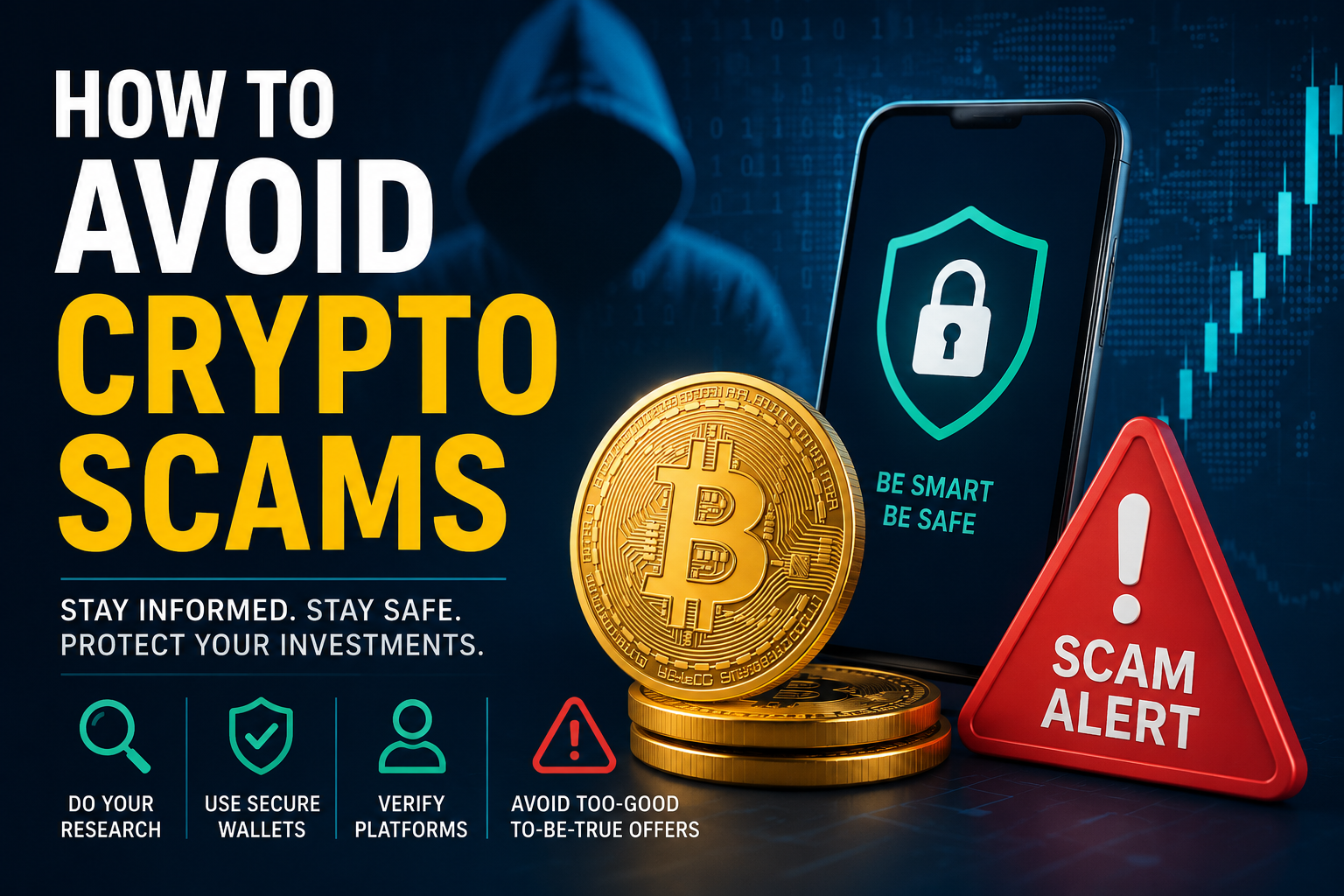
The cryptocurrency market has transformed how people invest, trade, and transfer money. From Bitcoin and Ethereum to thousands of emerging digital assets, crypto offers exciting opportunities for financial growth and innovation. However, as the industry continues to expand, it has also become a prime target for scammers looking to exploit unsuspecting investors.
Every day, thousands of people lose money to fake investment platforms, phishing attacks, fraudulent giveaways, impersonation scams, and deceptive token launches. While blockchain technology itself is highly secure, the weakest point is often human trust rather than the technology.
The good news is that most crypto scams follow familiar patterns. Once you understand how these scams work, you can recognize warning signs before becoming a victim.
This guide explains the most common cryptocurrency scams and provides practical strategies to help you keep your digital assets safe.
Why Crypto Scams Are So Common
Unlike traditional banking systems, cryptocurrency transactions are usually irreversible. Once funds are transferred to another wallet, recovering them is extremely difficult.
Scammers are attracted to crypto because they can:
- Receive payments anonymously
- Operate across international borders
- Create fake websites and tokens quickly
- Exploit the fear of missing out (FOMO)
- Disappear without leaving a trace
New investors are especially vulnerable because they may not fully understand wallets, exchanges, blockchain transactions, or smart contracts.
Education remains the strongest defense against fraud.
Most Common Types of Crypto Scams
1. Fake Investment Platforms
One of the oldest crypto scams involves fake trading or investment platforms.
These websites promise guaranteed profits, automated trading, or daily returns that sound too good to ignore. Initially, users may even be allowed to withdraw small amounts, creating a false sense of trust. Eventually, when larger investments are deposited, withdrawals become impossible.
Red flags include:
- Guaranteed returns
- Unrealistic daily profits
- Pressure to invest immediately
- No company registration
- Anonymous team members
Remember that legitimate investments never guarantee profits.
2. Phishing Websites
Phishing scams attempt to steal your wallet credentials or exchange login information.
Scammers create websites that look almost identical to popular crypto exchanges. They send fake emails or advertisements encouraging users to log in.
Once you enter your password or recovery phrase, your assets can disappear within minutes.
To stay safe:
- Bookmark official exchange websites.
- Double-check every URL before logging in.
- Never click exchange links from emails or social media messages.
- Enable two-factor authentication whenever possible.
3. Fake Crypto Giveaways
You may have seen posts claiming:
“Send 1 ETH and receive 2 ETH back.”
These fake giveaways often impersonate famous entrepreneurs, crypto influencers, or major blockchain companies.
The scam works because victims believe they are participating in a promotional event.
No legitimate company requires you to send cryptocurrency first to receive more later.
If someone asks you to transfer crypto before receiving a reward, it is almost certainly a scam.
4. Rug Pulls
A rug pull occurs when developers launch a cryptocurrency project, attract investors, and then suddenly abandon the project while taking investors’ funds.
This is especially common in decentralized finance (DeFi) and meme coin markets.
Warning signs include:
- Anonymous developers
- No project roadmap
- Unrealistic promises
- No independent security audit
- Extremely low liquidity
- Aggressive influencer marketing
Always research the development team and token economics before investing.
5. Pump-and-Dump Schemes
Pump-and-dump scams artificially inflate a cryptocurrency’s price through coordinated buying and misleading promotions.
Once enough buyers enter the market, organizers sell their holdings, causing prices to collapse.
Victims often buy near the top and experience significant losses.
Avoid investment groups promising:
- Secret insider signals
- Guaranteed moonshots
- Exclusive trading groups
- Limited-time buying opportunities
Successful investing requires research rather than hype.
6. Impersonation Scams
Scammers frequently pretend to be:
- Customer support agents
- Exchange representatives
- Blockchain developers
- Influencers
- Investment advisors
They contact victims through Telegram, Discord, WhatsApp, X, Facebook, or email.
Their goal is usually to obtain:
- Recovery phrases
- Private keys
- Login credentials
- Wallet approvals
Legitimate support teams will never ask for your wallet’s recovery phrase.
7. Fake Wallet Applications
Cybercriminals sometimes publish counterfeit wallet apps that closely resemble trusted wallet providers.
After installation, these apps secretly capture recovery phrases or private keys.
Always download wallet software directly from the official website or verified app stores.
Before downloading, check:
- Publisher name
- Number of downloads
- User reviews
- Official website links
8. Romance and Friendship Scams
Some scams begin with friendly conversations instead of investment offers.
Scammers build relationships over weeks or even months before introducing cryptocurrency investments.
Eventually, victims are persuaded to invest through fraudulent trading platforms controlled by the scammers.
Be cautious whenever someone you’ve met online encourages you to invest in crypto.
Essential Tips to Avoid Crypto Scams
Research Before Investing
Never purchase a cryptocurrency simply because someone recommended it.
Instead, investigate:
- The project’s website
- Whitepaper
- Development team
- Community activity
- Token distribution
- Market history
- Independent reviews
Well-established projects usually maintain transparent communication with their communities.
Never Share Your Recovery Phrase
Your wallet’s recovery phrase is the master key to your cryptocurrency.
Anyone who possesses it can control your assets.
No legitimate company, exchange, wallet provider, or blockchain developer will ever ask for your recovery phrase.
Store it:
- Offline
- On paper
- In multiple secure locations
- Away from internet-connected devices
Avoid storing recovery phrases in cloud storage, screenshots, or email drafts.
Enable Strong Security
Use every security feature available.
Best practices include:
- Two-factor authentication (2FA)
- Hardware security keys
- Strong unique passwords
- Password managers
- Biometric authentication where available
These measures significantly reduce the risk of unauthorized account access.
Use Hardware Wallets
If you own substantial cryptocurrency holdings, consider storing them in a hardware wallet.
Unlike software wallets, hardware wallets keep private keys offline, making them far more resistant to hacking attempts.
Long-term investors often use hardware wallets for maximum security.
Verify URLs Carefully
Scammers frequently register domains that differ by only one or two characters from legitimate websites.
Examples include:
- Extra letters
- Misspelled words
- Different domain extensions
- Similar-looking characters
Always inspect the full website address before logging in.
Bookmark trusted websites to reduce mistakes.
Watch Out for Urgency
Scammers create pressure because they do not want victims to think carefully.
Common phrases include:
- Limited-time opportunity
- Last chance
- Exclusive access
- Act immediately
- Prices will explode today
Legitimate investments remain available after you have had time to research them.
Never rush financial decisions.
Check Community Discussions
Healthy crypto projects maintain active communities where developers answer questions openly.
Before investing, review discussions on platforms like:
- GitHub
- Discord
- Telegram
- X
Look for genuine conversations instead of repetitive promotional messages.
If every comment appears overly positive with no criticism, proceed carefully.
Verify Smart Contracts
Before purchasing new tokens, verify:
- Official contract address
- Liquidity lock
- Audit reports
- Token ownership
- Transaction history
Many fake tokens use names almost identical to legitimate cryptocurrencies.
Buying the wrong contract can result in permanent losses.
Avoid Unknown Links
Crypto scammers often distribute malicious links through:
- Social media comments
- Direct messages
- Email campaigns
- Fake advertisements
- Chat groups
Never connect your wallet to unknown websites.
If you are uncertain about a website, leave immediately and verify its authenticity through official channels.
Learn to Spot Unrealistic Promises
One simple rule can prevent many scams:
If the promise sounds unbelievably profitable, it probably is.
Examples include:
- Guaranteed 20% daily returns
- Risk-free investments
- Instant wealth
- Secret insider strategy
- Double your Bitcoin overnight
Cryptocurrency markets are highly volatile.
No legitimate investment eliminates all risk.
What Should You Do If You Suspect a Scam?
If you believe you’ve encountered a cryptocurrency scam:
- Stop sending additional funds immediately.
- Disconnect your wallet from suspicious websites.
- Change passwords for related accounts.
- Enable or update two-factor authentication.
- Move remaining assets to a secure wallet if necessary.
- Report the scam to the exchange or platform involved.
- Warn others in the community to help prevent additional victims.
Acting quickly may reduce further losses.
Building Safe Crypto Habits
The safest crypto investors are not necessarily experts in blockchain technology. They simply follow disciplined security practices consistently.
Develop habits such as:
- Verifying every website before logging in.
- Researching every investment thoroughly.
- Keeping recovery phrases offline.
- Avoiding emotional investment decisions.
- Ignoring promises of guaranteed profits.
- Regularly reviewing wallet permissions.
- Staying informed about new scam techniques.
Security is an ongoing process rather than a one-time task.
Final Thoughts
Cryptocurrency has opened the door to remarkable financial innovation, but it has also created opportunities for fraudsters who prey on excitement, urgency, and misinformation. The most effective way to avoid crypto scams is to stay informed, remain patient, and verify every investment opportunity before committing your money.
Remember that legitimate crypto projects prioritize transparency, realistic expectations, and strong community engagement. If an offer promises guaranteed returns, pressures you to act immediately, or asks for your recovery phrase, treat it as a major warning sign.
By combining careful research, strong security practices, and a healthy level of skepticism, you can confidently explore the cryptocurrency market while minimizing your exposure to scams. In the fast-moving world of digital assets, protecting your investments starts with making informed decisions every step of the way.