Asset tokenization is rapidly emerging as one of the most transformative applications of blockchain technology. While cryptocurrencies like Bitcoin and Ethereum introduced the world to decentralized digital assets, tokenization extends blockchain’s capabilities to represent ownership of real-world and financial assets. From real estate and stocks to artwork and commodities, asset tokenization has the potential to fundamentally change how assets are owned, traded, and managed.
Financial institutions, governments, investment firms, and technology companies around the world are increasingly exploring tokenization because it promises greater efficiency, accessibility, transparency, and liquidity. Although the concept may sound technical, understanding asset tokenization becomes much easier when broken down into its core principles.
This guide explains what asset tokenization is, how it works, the types of assets that can be tokenized, its advantages and challenges, and why many experts believe it could reshape global financial markets.
What Is Asset Tokenization?
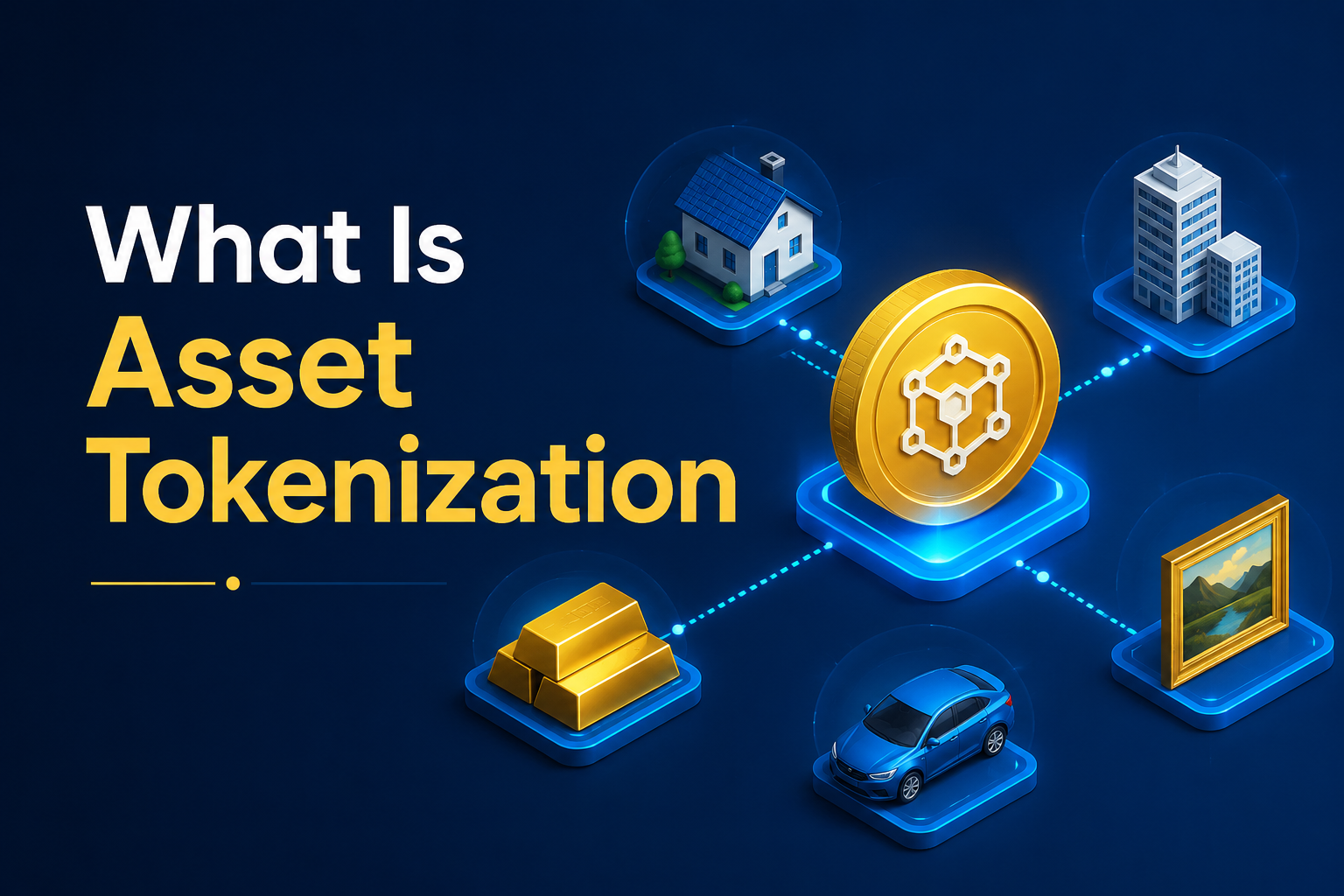
Asset tokenization is the process of converting ownership rights of an asset into digital tokens that exist on a blockchain network. These digital tokens represent ownership, value, or rights associated with an underlying asset.
The asset itself can be physical, financial, or digital. Instead of buying and selling the entire asset, investors can purchase tokenized portions that represent fractional ownership.
For example, a commercial property worth $10 million can be divided into one million digital tokens. Investors can then purchase smaller ownership shares rather than buying the entire property.
Asset tokenization combines traditional asset ownership with blockchain technology, creating a more efficient and accessible investment system.
Why Was Asset Tokenization Developed?
Traditional asset markets have several limitations that often restrict participation and efficiency. Many valuable assets require large amounts of capital, involve complicated legal processes, and lack liquidity.
Some of the major challenges in traditional markets include limited access to investments, lengthy settlement periods, high transaction costs, lack of transparency, and barriers to international participation.
Asset tokenization was developed to address these challenges by leveraging blockchain technology. By digitizing ownership rights, tokenization enables assets to become more accessible, transparent, and easier to trade.
The primary objective of tokenization is to democratize investment opportunities while improving the efficiency of global financial markets.
How Does Asset Tokenization Work?
Asset tokenization follows a structured process that combines legal ownership with blockchain infrastructure.
The process begins when an asset owner identifies an asset suitable for tokenization. The asset undergoes legal verification, valuation, and regulatory review. Once approved, blockchain-based digital tokens are created to represent ownership interests.
These tokens are then recorded on a blockchain network, creating a secure and transparent ownership ledger. Investors can purchase, hold, transfer, or trade these tokens through authorized platforms.
Because blockchain records ownership permanently and transparently, the entire process becomes more efficient than many traditional asset transfer systems.
The Asset Tokenization Process
| Stage | Description |
|---|---|
| Asset selection | Choosing the physical, financial, or digital asset |
| Valuation | Determining the asset’s market value |
| Legal structuring | Establishing ownership and compliance |
| Token creation | Generating blockchain-based ownership tokens |
| Distribution | Offering tokens to investors |
| Trading and management | Allowing investors to buy and sell tokens |
This framework allows ownership rights to become more flexible and accessible.
What Types of Assets Can Be Tokenized?
One of the most attractive aspects of tokenization is its versatility. Nearly any asset with measurable value can potentially be tokenized.
Real estate represents one of the largest opportunities for tokenization. Investors can purchase fractional ownership in commercial buildings, residential properties, hotels, and industrial facilities.
Financial assets such as stocks, bonds, investment funds, and private equity can also be tokenized. This creates opportunities for faster settlements and broader investor participation.
Precious metals, including gold and silver, can be represented by blockchain tokens backed by physical reserves.
Artwork and collectibles are increasingly being tokenized to allow investors to own fractional shares of valuable pieces.
Intellectual property rights, royalties, patents, and copyrights can also be tokenized, creating new revenue opportunities for creators and investors.
Real Estate Tokenization
Real estate tokenization has attracted significant interest because traditional property investments often require substantial capital and involve lengthy transaction processes.
For example, purchasing a commercial office building may require millions of dollars. Through tokenization, ownership can be divided into thousands or millions of smaller digital shares.
This creates several advantages for investors:
| Traditional Real Estate | Tokenized Real Estate |
|---|---|
| High capital requirements | Lower investment minimums |
| Limited liquidity | Greater liquidity |
| Complex transactions | Simplified transactions |
| Geographic barriers | Global accessibility |
| Long settlement periods | Faster settlements |
Real estate tokenization has the potential to make property investment more accessible to a broader range of investors.
How Blockchain Supports Asset Tokenization
Blockchain technology serves as the infrastructure that enables tokenized assets to function securely and efficiently.
The blockchain acts as a decentralized ledger that records ownership transactions permanently. Every transfer, purchase, or sale is verified and stored on the network.
Several blockchain features make asset tokenization possible:
Transparency allows investors to verify ownership records.
Security protects ownership through cryptographic mechanisms.
Immutability ensures transaction records cannot easily be altered.
Efficiency reduces administrative overhead.
Automation enables smart contracts to execute transactions automatically.
These features create a digital ownership system that operates with greater speed and reliability.
What Are Smart Contracts?
Smart contracts are automated software programs that execute predefined actions when certain conditions are met.
In asset tokenization, smart contracts perform several important functions. They can distribute dividends, process ownership transfers, verify investor eligibility, enforce compliance requirements, and manage voting rights.
For example, if a tokenized property generates rental income, a smart contract can automatically distribute profits to investors according to their ownership percentage.
This automation reduces costs while improving operational efficiency.
Benefits of Asset Tokenization
Asset tokenization offers numerous potential advantages over traditional asset ownership systems.
One of the most important benefits is increased liquidity. Assets that were previously difficult to trade can become more accessible through digital marketplaces.
Fractional ownership allows investors to participate with smaller amounts of capital.
Global accessibility enables investors worldwide to access investment opportunities regardless of geographic location.
Blockchain transparency improves trust and reduces information asymmetry.
Faster settlement times reduce delays associated with traditional financial systems.
Lower administrative costs can improve investment efficiency.
Automation through smart contracts simplifies asset management processes.
These advantages explain why tokenization has become a major focus within financial technology.
Challenges of Asset Tokenization
Despite its potential, asset tokenization still faces several challenges.
Regulatory uncertainty remains one of the largest obstacles because governments continue developing legal frameworks for digital assets.
Legal ownership structures vary across countries and jurisdictions.
Technology risks, including smart contract vulnerabilities and cybersecurity concerns, require ongoing attention.
Market liquidity may remain limited during the early stages of adoption.
Investor education remains essential because many participants are unfamiliar with blockchain technology.
Infrastructure development is still evolving, and interoperability between systems remains a challenge.
Addressing these issues will be critical for broader adoption.
Asset Tokenization vs Traditional Asset Ownership
| Feature | Traditional Assets | Tokenized Assets |
|---|---|---|
| Ownership transfer | Slow | Fast |
| Accessibility | Limited | Global |
| Investment minimums | High | Lower |
| Liquidity | Often limited | Potentially higher |
| Transparency | Moderate | High |
| Settlement speed | Days | Minutes or hours |
| Administrative costs | Higher | Lower |
This comparison demonstrates why many experts view tokenization as a significant innovation.
Why Are Financial Institutions Interested in Tokenization?
Major financial institutions have shown increasing interest in asset tokenization because of its potential to modernize financial markets.
Tokenization can improve operational efficiency, reduce settlement costs, expand investor access, increase liquidity, automate compliance procedures, and create new financial products.
Several banks and asset managers are actively exploring tokenized bonds, tokenized securities, and blockchain-based investment platforms.
Institutional participation may play an important role in accelerating adoption.
The Future of Asset Tokenization
Many analysts believe asset tokenization could become one of the largest applications of blockchain technology.
Potential future developments include tokenized stock exchanges, blockchain-based real estate markets, tokenized government securities, digital investment funds, and global asset trading platforms.
Some industry estimates suggest that trillions of dollars worth of assets could eventually become tokenized.
As blockchain infrastructure improves and regulations become clearer, tokenization may significantly reshape global capital markets.
Frequently Asked Questions
What is asset tokenization?
Asset tokenization is the process of converting ownership rights of an asset into blockchain-based digital tokens.
What assets can be tokenized?
Real estate, stocks, bonds, commodities, artwork, intellectual property, private equity, and many other assets can be tokenized.
How does asset tokenization work?
Blockchain technology creates digital tokens that represent ownership rights in an underlying asset, allowing investors to buy, hold, and trade those rights.
What is fractional ownership?
Fractional ownership allows multiple investors to own smaller portions of a larger asset.
Is asset tokenization secure?
Blockchain technology provides strong security features, although investors should still consider technological and regulatory risks.
Why is asset tokenization important?
Tokenization improves accessibility, liquidity, transparency, and efficiency in asset markets.
Can real estate be tokenized?
Yes. Real estate is one of the most popular and promising applications of asset tokenization.
How is asset tokenization different from cryptocurrency?
Cryptocurrencies function primarily as digital assets or currencies, while tokenized assets represent ownership rights in underlying assets.
Are tokenized assets regulated?
Regulations vary by country and continue to evolve as governments develop frameworks for digital assets.
What is the future of asset tokenization?
Many experts believe asset tokenization could become a major component of future financial markets and investment systems.
Conclusion
Asset tokenization represents a significant advancement in how ownership and investment opportunities can be managed using blockchain technology. By converting traditional assets into digital tokens, tokenization creates opportunities for greater accessibility, efficiency, liquidity, and transparency.
Although challenges such as regulation and market adoption remain, growing interest from financial institutions, technology companies, and investors suggests that tokenization could play an increasingly important role in the future of finance.
For beginners, understanding asset tokenization provides valuable insight into one of the most promising innovations emerging from the blockchain industry and the broader digital economy.