The internet has evolved dramatically over the past few decades. From simple static web pages in the early days of the internet to today’s highly interactive social media platforms and digital services, each phase of internet development has changed how people communicate, work, and access information. Now, a new concept called Web3 is gaining attention as the next major evolution of the internet.
Web3 promises to create a more decentralized, transparent, and user-controlled digital ecosystem. Instead of relying heavily on large technology companies to manage data, identities, and online interactions, Web3 aims to give users greater ownership and control through blockchain technology and decentralized networks.
Although Web3 has become a popular topic in the cryptocurrency and technology industries, many beginners still find the concept confusing. Understanding what Web3 is, how it works, and why it matters can help individuals and businesses prepare for the next phase of digital innovation.
This guide explains Web3 in simple terms, explores its key technologies, examines its advantages and challenges, and discusses its potential impact on the future of the internet.
What Is Web3?
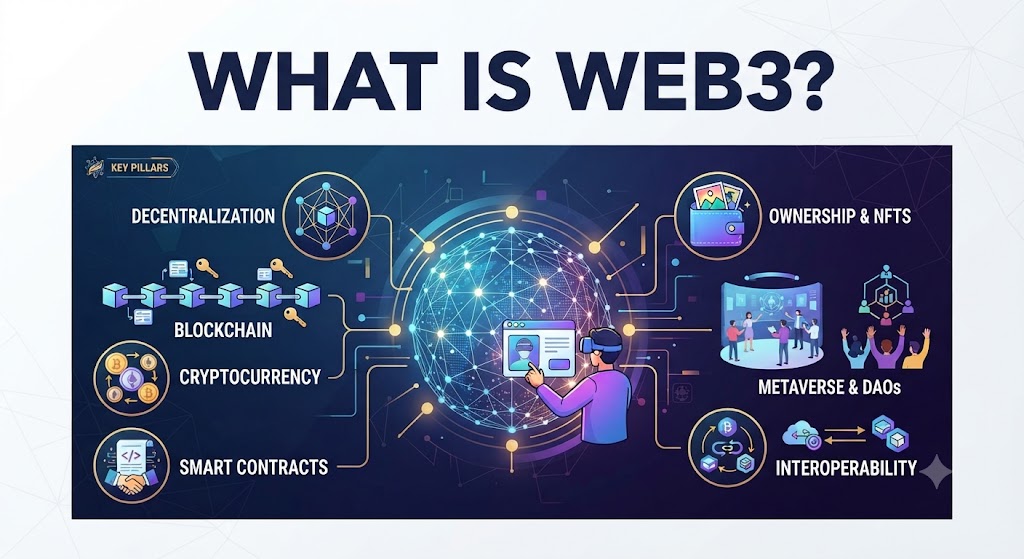
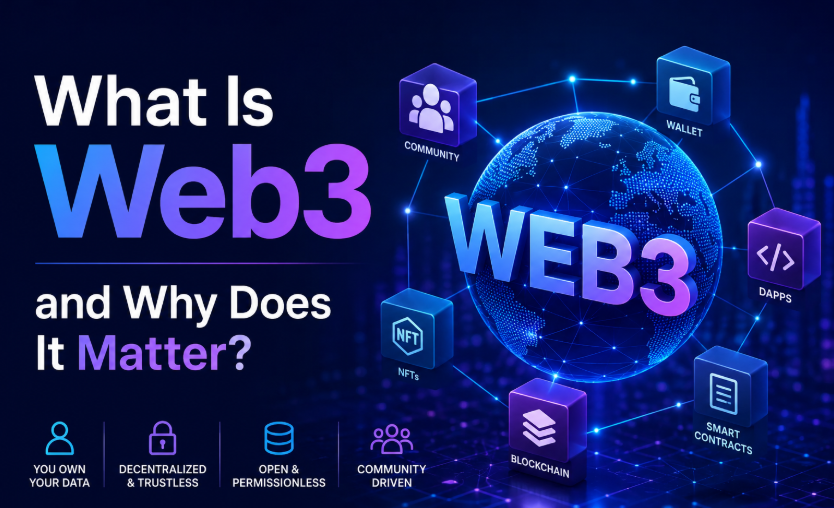
Web3 refers to the next generation of the internet that is built on decentralized technologies such as blockchain networks, cryptocurrencies, smart contracts, and decentralized applications.
Unlike today’s internet, where large corporations often control platforms and user data, Web3 aims to create a system where users own and control their digital identities, assets, and online interactions.
The primary goal of Web3 is to build an internet that is more open, transparent, secure, and decentralized. In simple terms, Web3 shifts power away from centralized organizations and gives greater control to users and communities.
Understanding the Evolution of the Internet
To understand Web3, it helps to examine how the internet has evolved over time.
| Internet Era | Characteristics | User Role |
|---|---|---|
| Web1 | Static websites and information | Read |
| Web2 | Interactive platforms and social media | Read and write |
| Web3 | Decentralized ownership and blockchain | Read, write, and own |
Web1 emerged during the early years of the internet and primarily consisted of static websites where users consumed information. Web2 introduced interactive platforms such as social media, online marketplaces, and streaming services. Users could create and share content, but large companies maintained control over platforms and user data. Web3 introduces ownership through blockchain technology, allowing users to control their digital assets, identities, and online experiences.
Why Was Web3 Created?
The development of Web3 was driven by concerns surrounding the current internet model. During the Web2 era, large technology companies gained significant control over user data, privacy concerns increased, platform censorship became controversial, users often lost control over their digital identities, content creators became dependent on centralized platforms, and data breaches became increasingly common.
Web3 aims to address these challenges by creating a decentralized internet infrastructure that reduces reliance on centralized intermediaries. Its goal is to create a digital environment where users own their data rather than corporations controlling it.
How Does Web3 Work?
Web3 operates through several interconnected technologies that enable decentralized systems.
At its core, Web3 uses blockchain networks to store information and verify transactions. Instead of relying on centralized servers controlled by companies, data can be distributed across thousands of computers worldwide.
Users interact with Web3 applications using cryptocurrency wallets that serve as digital identities. Smart contracts automate transactions and agreements without requiring intermediaries.
A user typically connects a digital wallet to a decentralized application. The application interacts with blockchain networks and smart contracts to execute transactions, and ownership records are then permanently stored on the blockchain. This system creates greater transparency and reduces dependence on centralized authorities.
Key Technologies Behind Web3
Several technologies make Web3 possible.
Blockchain Technology
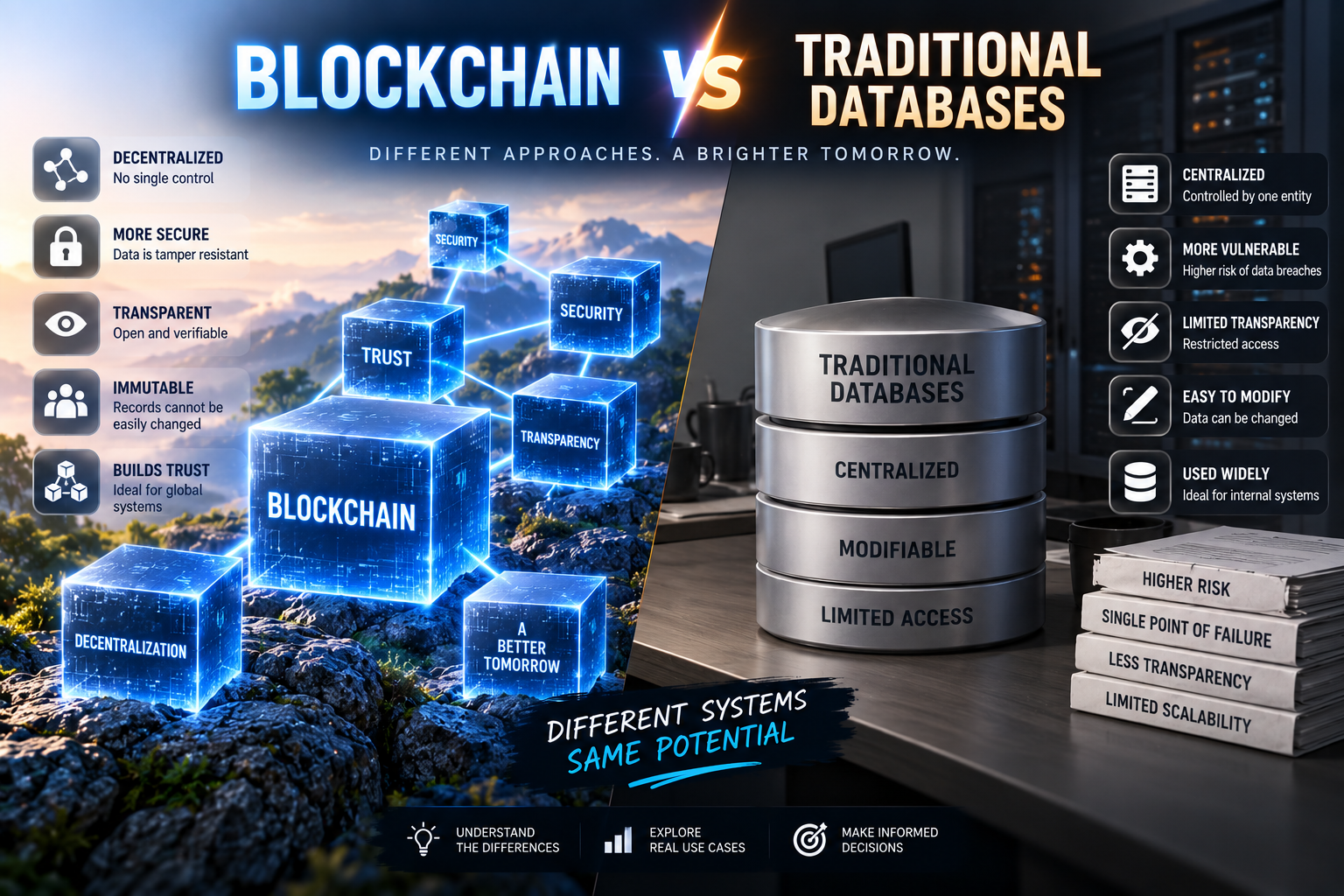
Blockchain serves as the foundation of Web3 by providing secure and transparent recordkeeping. Its key features include decentralization, security, transparency, immutability, and digital ownership capabilities. Without blockchain technology, Web3 could not function.
Smart Contracts
Smart contracts are automated software programs that execute agreements based on predefined conditions. These contracts eliminate the need for intermediaries in many transactions and services. They can be used for financial transactions, digital asset transfers, insurance claims, marketplace transactions, and voting systems.
Cryptocurrencies
Cryptocurrencies serve as the financial infrastructure of Web3. They facilitate payments, incentives, governance, staking, and asset ownership. Many Web3 ecosystems rely on native cryptocurrencies to support their operations.
Decentralized Applications
Decentralized applications, often called dApps, are software applications that operate on blockchain networks. Unlike traditional applications, decentralized applications do not rely entirely on centralized servers. Examples include decentralized exchanges, blockchain games, and decentralized finance platforms.
What Is Digital Ownership in Web3?
One of Web3’s most important innovations is digital ownership.
In traditional internet systems, users often do not truly own their online assets. For example, social media accounts, digital content, and in-game items are usually controlled by centralized platforms.
Web3 allows users to own digital assets directly through blockchain technology.
| Digital Asset | Ownership Method |
|---|---|
| Cryptocurrency | Blockchain wallets |
| NFTs | Token ownership |
| Virtual land | Blockchain records |
| Gaming assets | Digital tokens |
| Identity credentials | Decentralized identity systems |
This ownership model gives users greater control over their digital lives.
What Are Decentralized Autonomous Organizations?
Decentralized Autonomous Organizations, commonly called DAOs, represent another important component of Web3.
DAOs are organizations governed by blockchain-based rules and community voting. Instead of relying on traditional management structures, DAO members participate in decision-making through token ownership and voting systems.
DAOs can manage investment funds, software projects, online communities, protocol development, and governance systems. This creates a more democratic approach to organizational management.
Benefits of Web3
Web3 offers several potential advantages over traditional internet systems. One of its primary benefits is greater user ownership, allowing individuals to maintain control of their digital assets and identities. It also improves privacy by giving users more control over personal information. Decentralization reduces dependence on a single authority, while blockchain transparency provides greater visibility into transactions and activities.
Additionally, Web3 can reduce censorship by limiting reliance on centralized gatekeepers. Global accessibility enables anyone with internet access to participate in many Web3 ecosystems, and the technology creates new economic opportunities for creators, developers, and investors. These advantages have contributed to growing interest in decentralized technologies.
Challenges Facing Web3
Despite its potential, Web3 faces several challenges. Many Web3 applications remain technically complex for beginners. Some blockchain networks experience congestion and high transaction fees, which can limit scalability. Regulatory uncertainty remains a concern as governments continue developing digital asset regulations.
Security risks such as smart contract vulnerabilities and cyberattacks also persist. Furthermore, mainstream adoption remains limited, and the supporting infrastructure continues to evolve. Addressing these challenges will be essential for broader adoption.
Industries Being Impacted by Web3
Web3 technologies are influencing multiple industries. In finance, decentralized finance platforms provide alternative financial services. In gaming, blockchain technology allows players to own in-game assets. The art and entertainment industries benefit from digital ownership models that create new opportunities for creators.
Social media platforms are exploring decentralized alternatives that provide greater user control. Supply chain management can benefit from improved transparency and traceability, while decentralized identity systems may enhance privacy and security. As adoption increases, additional industries may also be transformed.
Is Web3 the Future of the Internet?
Many technology experts believe Web3 represents an important step in the evolution of the internet.
However, Web3 may not completely replace existing internet systems. Instead, many analysts expect Web2 and Web3 technologies to coexist and gradually integrate.
Potential future developments include decentralized social platforms, blockchain-based financial systems, digital identity solutions, virtual economies, tokenized ownership systems, and artificial intelligence integration. The ultimate impact of Web3 will depend on technological progress, regulation, and user adoption.
Frequently Asked Questions
What is Web3?
Web3 is the next generation of the internet that uses blockchain technology, cryptocurrencies, and decentralized systems to give users greater ownership and control.
How is Web3 different from Web2?
Web2 focuses on centralized platforms, while Web3 emphasizes decentralization, digital ownership, and blockchain-based systems.
Does Web3 use blockchain?
Yes. Blockchain technology serves as the foundation for most Web3 applications and services.
What are decentralized applications?
Decentralized applications are software programs that operate on blockchain networks rather than centralized servers.
What role do cryptocurrencies play in Web3?
Cryptocurrencies provide payment systems, incentives, governance mechanisms, and digital ownership within Web3 ecosystems.
Is Web3 secure?
Web3 offers strong security features through blockchain technology, although risks such as hacks and smart contract vulnerabilities still exist.
What are DAOs?
Decentralized Autonomous Organizations are community-governed organizations that operate using blockchain-based voting and governance systems.
Can anyone use Web3?
Yes. Anyone with internet access and a compatible digital wallet can access many Web3 applications.
Why is Web3 important?
Web3 aims to create a more open, decentralized, and user-controlled internet.
Is Web3 the future of the internet?
Many experts believe Web3 could play a significant role in the future evolution of digital technologies and online services.
Conclusion
Web3 represents a new vision for the internet that prioritizes decentralization, digital ownership, transparency, and user empowerment. By combining blockchain technology, smart contracts, cryptocurrencies, and decentralized applications, Web3 seeks to create a more open and equitable digital ecosystem.
Although the technology remains in its early stages and faces several challenges, interest in Web3 continues to grow among developers, businesses, investors, and governments worldwide.
Understanding Web3 provides valuable insight into how the internet may evolve over the coming decades. Whether through finance, gaming, social media, or digital identity, Web3 has the potential to reshape many aspects of our digital lives and redefine how individuals interact with technology.