Ethereum remains the leading blockchain for decentralized applications (dApps), smart contracts, decentralized finance (DeFi), NFTs, and Web3 innovation. Its strong developer ecosystem and continuous upgrades have made it the foundation for thousands of blockchain projects. While Ethereum itself continues to evolve, many projects built on its network are pushing the boundaries of finance, gaming, infrastructure, and artificial intelligence.
For investors, developers, and crypto enthusiasts, keeping an eye on promising Ethereum-based projects can provide valuable insights into where the blockchain industry is heading. However, with thousands of tokens available, separating genuinely innovative projects from short-lived trends is essential.
This guide highlights some of the top Ethereum projects to watch in 2026 and explains why they stand out in the rapidly growing blockchain ecosystem.
Why Ethereum Continues to Lead the Blockchain Industry
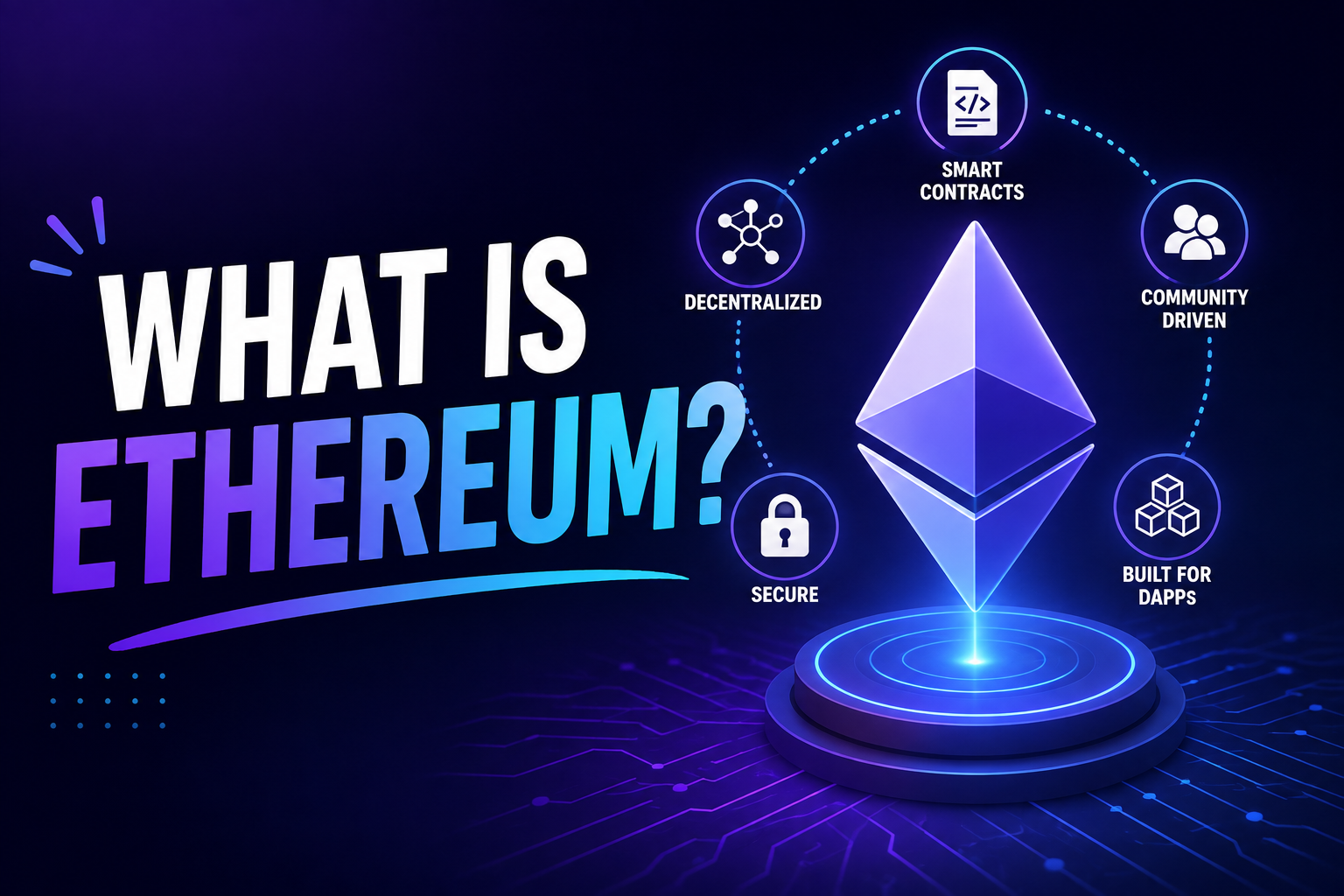
Ethereum is more than just a cryptocurrency. It is a decentralized platform that enables developers to build applications without relying on centralized servers or intermediaries.
Its ecosystem supports:
- Decentralized Finance (DeFi)
- Non-Fungible Tokens (NFTs)
- Gaming and metaverse projects
- Decentralized Autonomous Organizations (DAOs)
- Layer 2 scaling solutions
- Tokenized real-world assets
- AI-powered blockchain applications
As Ethereum continues to improve scalability and efficiency, more innovative projects are choosing to build on its network.
1. Chainlink (LINK)
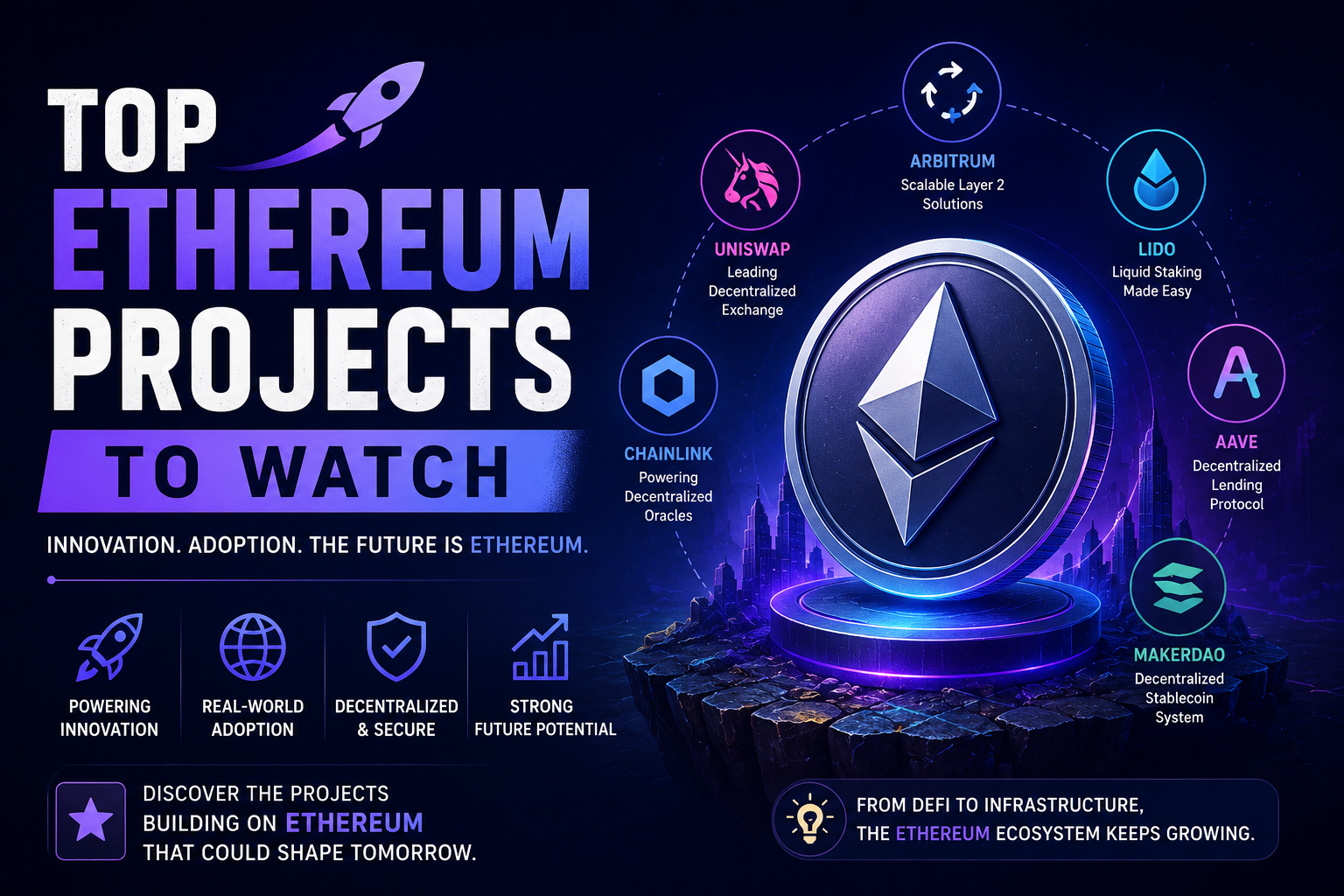
Chainlink has become one of the most important infrastructure projects in the Ethereum ecosystem. It provides decentralized oracle services that connect blockchain smart contracts with real-world data such as asset prices, weather information, payment systems, and financial market data.
Why Watch It
- Industry-leading oracle network
- Supports thousands of decentralized applications
- Expanding Cross-Chain Interoperability Protocol (CCIP)
- Growing enterprise adoption
As tokenized assets and institutional blockchain adoption increase, reliable external data becomes even more valuable.
2. Uniswap (UNI)
Uniswap remains one of the largest decentralized exchanges (DEXs) built on Ethereum.
Instead of traditional order books, Uniswap uses automated market makers (AMMs), allowing users to swap cryptocurrencies directly from their wallets.
Key Strengths
- High liquidity
- Permissionless trading
- Constant protocol upgrades
- Strong developer ecosystem
Decentralized trading continues to grow, making Uniswap a cornerstone of Ethereum’s DeFi landscape.
3. Aave (AAVE)
Aave is one of the most established decentralized lending platforms.
Users can lend digital assets to earn interest or borrow cryptocurrencies without relying on traditional financial institutions.
Why Investors Follow Aave
- Flash loans
- Multi-chain expansion
- Institutional DeFi initiatives
- Strong security record
As decentralized lending matures, Aave continues introducing innovative financial products.
4. Lido DAO (LDO)
Ethereum’s Proof-of-Stake model has increased demand for staking services.
Lido allows users to stake ETH while maintaining liquidity through liquid staking tokens.
Growth Drivers
- Simplifies Ethereum staking
- Popular among institutional investors
- Supports DeFi integration
- Large share of staked ETH
Liquid staking has become one of the fastest-growing sectors within Ethereum.
5. Arbitrum (ARB)
Arbitrum is one of Ethereum’s leading Layer 2 scaling solutions.
It processes transactions more efficiently while benefiting from Ethereum’s security.
Why It Matters
- Lower transaction fees
- Faster confirmations
- Growing ecosystem
- Strong developer adoption
As Ethereum usage expands, Layer 2 networks like Arbitrum play an increasingly important role.
6. Optimism (OP)
Optimism is another major Layer 2 blockchain helping reduce congestion on Ethereum.
Its optimistic rollup technology significantly improves transaction speed while lowering costs.
Key Advantages
- Lower gas fees
- Expanding DeFi ecosystem
- Public Goods Funding initiatives
- Enterprise-friendly infrastructure
Optimism continues attracting developers building scalable decentralized applications.
7. MakerDAO (MKR)
MakerDAO powers DAI, one of the largest decentralized stablecoins in the crypto market.
Unlike centralized stablecoins, DAI maintains its peg through decentralized collateral mechanisms.
Why It’s Important
- Stablecoin infrastructure
- Decentralized governance
- Long operating history
- Essential DeFi building block
Stablecoins remain critical for decentralized finance and blockchain payments.
8. EigenLayer (EIGEN)
EigenLayer introduces the concept of restaking, allowing Ethereum validators to secure additional protocols using already-staked ETH.
Why It Has Gained Attention
- New security model
- Capital efficiency
- Expanding developer ecosystem
- Innovative infrastructure
Restaking has emerged as one of Ethereum’s most closely watched innovations.
9. The Graph (GRT)
The Graph serves as Ethereum’s indexing protocol.
Instead of searching blockchain data manually, developers use The Graph to retrieve blockchain information efficiently.
Key Benefits
- Faster blockchain queries
- Widely adopted by developers
- Essential Web3 infrastructure
- Supports multiple blockchain networks
As decentralized applications multiply, blockchain indexing becomes increasingly valuable.
10. ENS (Ethereum Name Service)
Ethereum addresses are long and difficult to remember.
Ethereum Name Service replaces complex wallet addresses with human-readable names.
For example:
Instead of:
0x8f2d4e6b91...
Users can send funds to:
yourname.eth
Why ENS Matters
- Simplifies crypto payments
- Improves user experience
- Supports decentralized identity
- Growing adoption across Web3
Digital identity is becoming an important part of blockchain technology.
Emerging Ethereum Sectors to Watch
While individual projects matter, several sectors within Ethereum are showing strong momentum.
Layer 2 Scaling
Projects improving transaction speed and reducing fees continue attracting developers and users.
Examples include:
- Arbitrum
- Optimism
- Base ecosystem projects
- zk-rollup solutions
Real-World Asset Tokenization
Traditional financial assets such as bonds, real estate, and private credit are increasingly being tokenized on Ethereum.
This sector could become one of blockchain’s largest growth opportunities.
Artificial Intelligence and Blockchain
AI-powered decentralized applications are gaining traction.
Ethereum provides smart contract infrastructure that complements AI-driven automation, decentralized data markets, and intelligent financial applications.
Decentralized Physical Infrastructure (DePIN)
DePIN projects reward users for contributing real-world infrastructure such as wireless networks, storage, or computing power.
This emerging category has attracted growing investor interest.
Factors to Evaluate Before Investing
Not every Ethereum project will succeed. Before investing, consider these factors:
Development Activity
Projects with active developers often adapt better to changing market conditions.
Look for:
- Frequent code updates
- GitHub activity
- Transparent communication
Community Support
Strong communities help drive long-term adoption.
Healthy communities typically include:
- Active governance
- Developer participation
- Educational content
- Constructive discussions
Token Utility
Ask yourself:
- Does the token have real utility?
- Is it required within the ecosystem?
- Does demand grow as adoption increases?
Projects with genuine utility often have stronger long-term potential.
Security
Security should always be a priority.
Review whether the project has:
- Independent audits
- Bug bounty programs
- Transparent security practices
- Proven operational history
Security incidents can significantly impact investor confidence.
Partnerships
Strategic partnerships with established blockchain companies, enterprises, or financial institutions may indicate growing adoption.
However, always verify partnership announcements through official sources.
Risks to Consider
Despite Ethereum’s leadership, investing in blockchain projects involves risks.
These include:
- Market volatility
- Regulatory changes
- Smart contract vulnerabilities
- Competition from other blockchains
- Technology upgrades
- Liquidity risks
Diversification and careful research remain essential.
Final Thoughts
Ethereum continues to be the foundation of decentralized innovation, supporting some of the most influential projects in cryptocurrency. Platforms like Chainlink, Uniswap, Aave, Lido, Arbitrum, Optimism, MakerDAO, EigenLayer, The Graph, and Ethereum Name Service each play a unique role in expanding the capabilities of the Ethereum ecosystem.
While these projects show strong potential, no investment is guaranteed to succeed. Investors should focus on understanding each project’s technology, real-world use cases, development activity, security, and long-term vision before making financial decisions.
As Ethereum continues to evolve with improved scalability, institutional adoption, and growing Web3 applications, its ecosystem is likely to remain one of the most important areas to watch in the blockchain industry. Staying informed and conducting thorough research will help you identify opportunities while managing the risks associated with this fast-moving market.