Cryptocurrency has evolved far beyond Bitcoin, with hundreds of blockchain projects offering unique solutions for global finance. Among them, XRP has established itself as one of the most recognized digital assets, particularly for its focus on fast and low-cost cross-border payments.
Unlike many cryptocurrencies that aim to replace traditional banking systems, XRP was designed to improve them by enabling quicker, more efficient international money transfers. Financial institutions, payment providers, and businesses have explored its technology to reduce settlement times and transaction costs.
If you’re new to cryptocurrency, understanding what XRP is, how it works, and how it differs from other digital assets can help you make more informed decisions. This guide covers everything you need to know about XRP, its technology, use cases, benefits, risks, and future potential.
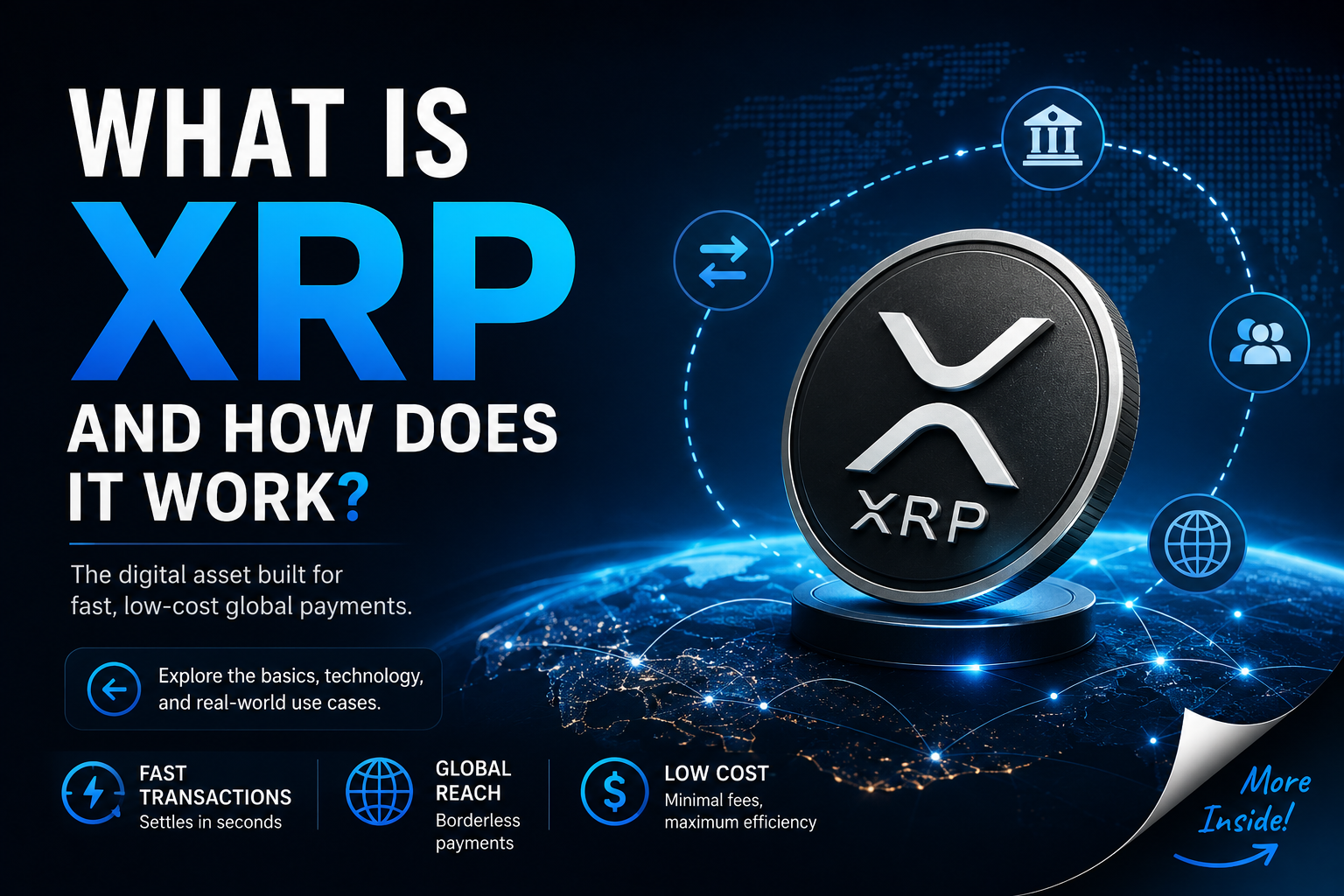
What Is XRP?
XRP is the native digital asset of the XRP Ledger (XRPL), an open-source, decentralized blockchain designed for fast and efficient payments.
Launched in 2012, the XRP Ledger was created to solve one of the biggest challenges in global finance: slow and expensive international transactions.
Unlike traditional bank transfers that can take several days to settle, XRP transactions are typically confirmed within seconds.
The XRP Ledger supports:
- Fast peer-to-peer payments
- Cross-border money transfers
- Currency exchange
- Token issuance
- Smart payment solutions
Its primary goal is to make transferring value as simple and efficient as sending an email.
Who Created XRP?
The XRP Ledger was developed by engineers David Schwartz, Jed McCaleb, and Arthur Britto.
Shortly after the ledger’s creation, the company now known as Ripple was established to develop payment solutions using XRP Ledger technology.
Although Ripple develops products that can use XRP, the XRP Ledger itself is an independent, open-source blockchain maintained by a global community of validators and developers.
How Does XRP Work?
Unlike Bitcoin, which relies on mining, XRP uses a unique consensus mechanism.
Instead of miners competing to solve mathematical puzzles, trusted validators on the XRP Ledger compare transaction information and agree on the validity of transactions.
Once consensus is reached, the transaction is permanently recorded on the blockchain.
This process offers several advantages:
- Fast settlement
- Low transaction fees
- High energy efficiency
- High transaction throughput
Because no mining is required, XRP consumes significantly less energy than proof-of-work cryptocurrencies.
How Fast Are XRP Transactions?
One of XRP’s biggest advantages is transaction speed.
Typical XRP transactions are completed in:
- Approximately 3–5 seconds
- Very low transaction fees
- Thousands of transactions per second under optimal network conditions
By comparison:
- Traditional international bank transfers may take several business days.
- Some blockchain networks can experience congestion and higher fees during periods of heavy demand.
This efficiency has made XRP attractive for payment-focused applications.
What Makes XRP Different from Bitcoin?
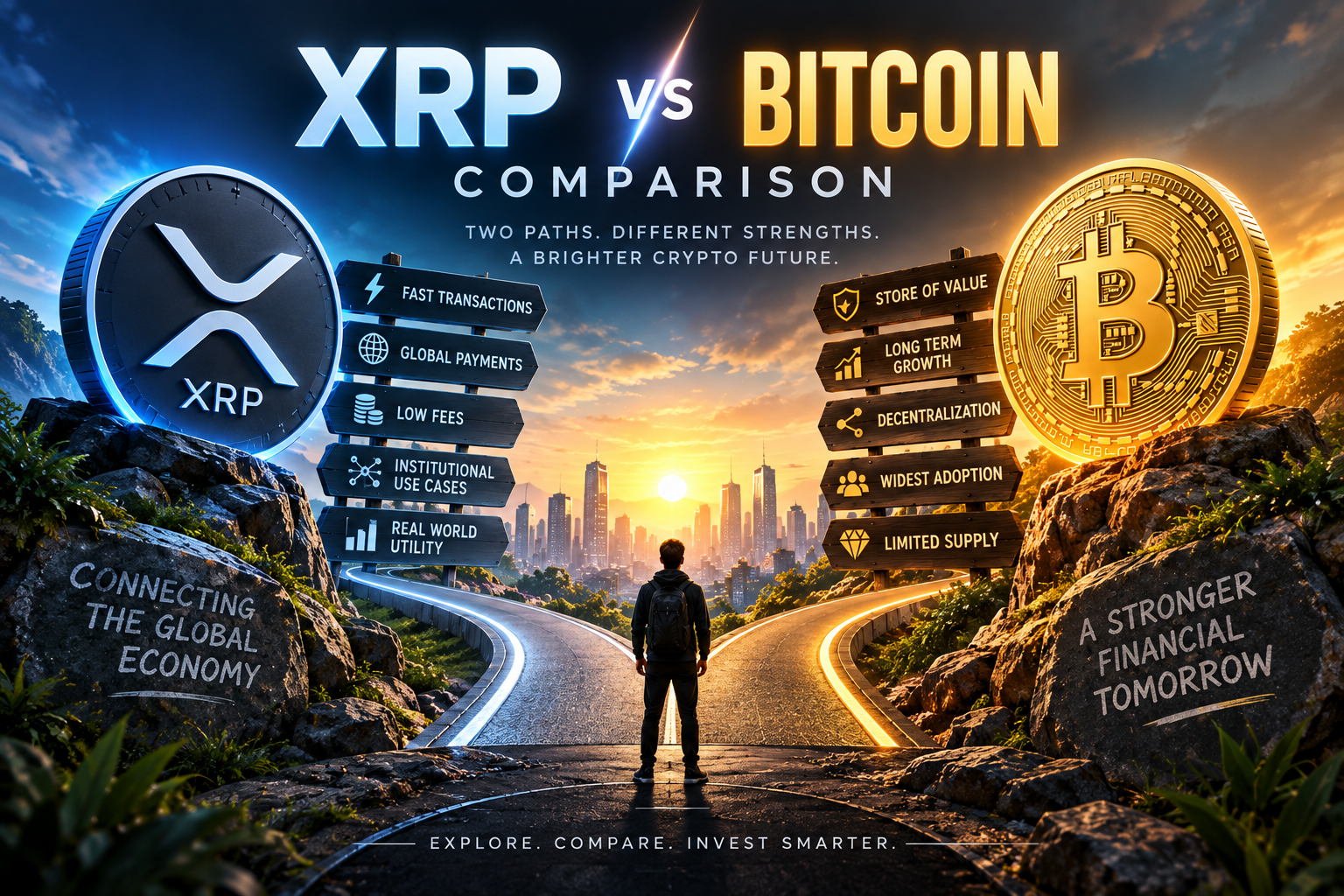
Although both are cryptocurrencies, XRP and Bitcoin were built for different purposes.
| Feature | Bitcoin | XRP |
|---|---|---|
| Primary Purpose | Digital store of value | Fast global payments |
| Consensus | Proof of Work | XRP Ledger Consensus Protocol |
| Mining | Required | Not required |
| Transaction Speed | Around 10 minutes or more | About 3–5 seconds |
| Transaction Fees | Can increase during congestion | Typically very low |
| Energy Usage | High | Much lower |
Bitcoin focuses on decentralization and scarcity, while XRP emphasizes payment efficiency and speed.
XRP Supply
Unlike Bitcoin’s gradually mined supply, all XRP was created when the network launched.
Key facts include:
- Maximum supply of 100 billion XRP
- No additional XRP can be created
- A small amount of XRP is permanently destroyed as a transaction fee, helping prevent spam on the network
This fixed supply model makes XRP different from many cryptocurrencies with inflationary issuance.
Real-World Uses of XRP
Cross-Border Payments
One of XRP’s primary use cases is international money transfers.
Instead of using multiple intermediary banks, XRP can act as a bridge currency, helping move funds between different fiat currencies more efficiently.
This can reduce:
- Settlement times
- Transaction costs
- Liquidity requirements
Financial Institutions
Banks and payment providers have explored blockchain technology to modernize payment infrastructure.
Some institutions have tested or integrated Ripple’s payment solutions, depending on their operational and regulatory requirements.
Remittances
International workers often send money home to their families.
Traditional remittance services can involve high fees and lengthy processing times.
Blockchain-based payment networks have the potential to reduce costs and speed up these transfers.
Tokenization
The XRP Ledger also supports issuing custom digital assets.
Developers can create:
- Stablecoins
- Loyalty tokens
- Digital collectibles
- Tokenized real-world assets
This expands the ledger’s use beyond simple payments.
Advantages of XRP
Several features make XRP stand out in the cryptocurrency market.
Fast Transactions
Payments are confirmed within seconds, making XRP one of the quickest major cryptocurrencies.
Low Fees
Transaction costs are typically only a tiny fraction of a dollar, making XRP suitable for frequent transfers and micropayments.
Energy Efficiency
Because XRP does not use mining, its energy consumption is significantly lower than proof-of-work blockchains.
Scalability
The XRP Ledger can process a high number of transactions, supporting large-scale payment applications.
Established Ecosystem
After more than a decade of operation, XRP has built a strong ecosystem of exchanges, wallets, developers, and businesses.
Risks to Consider
Like every cryptocurrency, XRP carries risks.
Market Volatility
XRP’s price can fluctuate significantly over short periods.
Investors should be prepared for price swings and avoid investing more than they can afford to lose.
Regulatory Developments
The cryptocurrency industry continues to evolve, and regulatory decisions in different countries may affect adoption and market sentiment.
Staying informed about legal developments is important for investors.
Competition
XRP competes with:
- Stablecoins
- Central Bank Digital Currencies (CBDCs)
- Traditional payment networks
- Other blockchain payment platforms
Continued innovation will influence its long-term position in the market.
Is XRP Decentralized?
The XRP Ledger operates through a decentralized network of independent validators that participate in transaction consensus.
However, discussions about the degree of decentralization compared with some other blockchain networks continue within the cryptocurrency community.
Understanding these differing perspectives can help investors evaluate the technology more objectively.
Can You Stake XRP?
Unlike many proof-of-stake cryptocurrencies, XRP does not support native staking because its consensus mechanism does not rely on validators locking tokens.
Some exchanges may offer yield products involving XRP, but these are generally lending or investment services rather than on-chain staking.
Investors should understand the risks before participating in such programs.
How to Buy and Store XRP
If you decide to purchase XRP, the basic steps include:
- Choose a reputable cryptocurrency exchange.
- Complete identity verification if required.
- Deposit funds.
- Purchase XRP.
- Transfer your holdings to a secure wallet if you plan to hold them long term.
For better security, many long-term investors use hardware wallets or trusted self-custody wallets instead of leaving large balances on exchanges.
Is XRP a Good Investment?
Whether XRP is a suitable investment depends on your financial goals, risk tolerance, and understanding of the cryptocurrency market.
Before investing, consider:
- The project’s real-world use cases
- Adoption by businesses and developers
- Market conditions
- Regulatory environment
- Your overall investment strategy
No cryptocurrency can guarantee future returns, so thorough research and diversification remain essential.
Final Thoughts
XRP is one of the longest-standing and most widely recognized cryptocurrencies, built with a clear focus on improving the speed and efficiency of global payments. Its fast transaction times, low fees, energy-efficient consensus mechanism, and established ecosystem have made it an important player in the blockchain industry.
At the same time, XRP operates in a competitive and rapidly evolving market where technology, regulation, and adoption continue to shape its future. Anyone considering XRP should take the time to understand how the XRP Ledger works, evaluate its strengths and risks, and avoid making investment decisions based solely on market hype.
With a well-informed approach, XRP can be better understood not just as a digital asset, but as a blockchain technology designed to streamline the movement of value across borders in an increasingly connected financial world.